Frases sobre toda página 15


Gerson De Rodrigues (1995) poeta, escritor e anarquista Brasileiro
Morte Suicídio Nietzsche Niilismo Vida


Gerson De Rodrigues (1995) poeta, escritor e anarquista Brasileiro
Niilismo Morte Deus Existencialismo Vida Nietzsche


Marqués de Sade (1740–1814) Aristocrata francês e escritor libertino
“A ganância e o fanatismo são os pais de todas as guerras.”
Maurício.Cavalheiro.Pindamonhangaba
Maurício.Cavalheiro-Pindamonhangaba

Che Guevara (1928–1967) guerrilheiro e político, líder da Revolução Cubana
Discursos, Discurso às Nações Unidas (1964)


Inácio de Antioquia (35–108) Bispo de Antioquia e Santo da Igreja Católica
Epístola aos magnésios, ca. 107
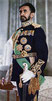
Haile Selassie (1892–1975) Regente e Imperador da Etiópia
Instruções para as unidades Militares (19 de outubro de 1935)."
Endereço da Liga das Nações 1936

Mariana Alcoforado livro As Cartas Portuguesas
"Il ne sauroit séparer nos cœurs: l'amour qui est plus puissant que lui les a unis pour toute notre vie."
Atribuídas, Carta primeira
Fonte: Lettres portugaises (As Cartas Portuguesas - Carta primeira)

Jesse Owens (1913–1980)
"It took a lot of courage for him to befriend me in front of Hitler ... You can melt down all the medals and cups I have and they wouldn't be a plating on the 24-karat friendship I felt for Lutz Long at that moment. Hitler must have gone crazy watching us embrace. The sad part of the story is I never saw Long again. He was killed in World War II."
sobre as felicitações dadas pelo atleta alemão Lutz Long, vencedor da medalha de prata na prova do salto em comprimento, que segundo alguns relatos terá dado conselhos a Owens que o ajudaram a vencer a medalha de ouro nessa mesma prova.
Fonte: Schwartz, Larry. Owens pierced a myth na ESPN SportsCentury, 2005


James Baldwin (escritor) (1924–1987)
"Every time I attend a conference of white writers, I have a method for finding out if my colleagues are racist. It consists of uttering stupidities and maintaining absurd theses. If they listen respectfully and, at the end, overwhelm me with applause, there isn't the slightest doubt: they are filthy racists." <br class="br">Como citado por Daphne Patai & Noretta Koertge (1943) em Professing feminism: Education and indocrination in women's studies / Daphne Patai and Noretta Koertge. — New and expanded ed. — Copyright 2003 by Lexigton Books, p. 80 https://books.google.com.br/books?id=5IKHbZacWJYC&pg=PA80. Texto traduzido por M. Elitista em uma publicação de 8 de outubro de 2015 https://www.facebook.com/AventurasnaJusticaSocial/photos/a.827394220675429.1073741828.827240997357418/905484919533025/?type=3 na página do Facebook Aventuras na Justiça Social https://www.facebook.com/AventurasnaJusticaSocial?fref=ts.


William James (1842–1910)
William James, Pragmatismo http://books.google.com.br/books?id=fxePOwAACAAJ&dq, Sexta Conferência, página 116, Trad. Jorge Caetano da Silva, ISBN 8572325751, 9788572325752 - 184 páginas.
William James (1842–1910)
William James, Pragmatismo http://books.google.com.br/books?id=fxePOwAACAAJ&dq, Segunda Conferência, página 59, Trad. Jorge Caetano da Silva, ISBN 8572325751, 9788572325752 - 184 páginas.

Luis Fernando Verissimo (1936) Escritor e cronista brasileiro
No livro Time dos Sonhos - Paixão, poesia e futebol. Rio de Janeiro: Objetiva, 2011. 144 p.

Max Heindel (1865–1919)
Max Heindel, como citado in: Lá Não Existem Flores - Página 44, Felipe Krummer Clube de Autores, ISBN 9788580454130, 2012, 526 páginas
Atribuidas

Rasputin (1869–1916) Místico russo
No início de dezembro em 1916, Rasputin enviou a Nicolau II uma carta profética http://www2.uol.com.br/historiaviva/artigos/rasputin_se_recusa_a_morrer.html, na qual fazia uma predição para a família real Romanov que suporia o assassinato do próprio czar, da czarina e de todos os seus filhos. <br class="br">Rasputin foi morto no dia 30 de dezembro de 1916. Um ano e meio depois, na madrugada de 16 para 17 de julho de 1918, a família real foi assassinada pelos bolcheviques.'

Enéas Carneiro (1938–2007)
A Crítica, 30/07/2005 - Sobre o futuro do Brasil
Fonte: [A Crítica, 30/07/2005, Enéas Carneiro, Entrevista, Jornal A Crítica, Brasil, português]

Darcy Ribeiro (1922–1997)
RIBEIRO, Darcy. O povo brasileiro: A formação e o sentido do Brasil. Segunda edição. São Paulo, Companhia das Letras, 1995, Pág. 167.
Atribuídas

Omnibus historiis se meus aptat amor. Me nova sollicitat, me tangit serior aetas. Haec melior specie corporis, illa sapit. Denique quas tota quisquam probet Urbe puellas, Noster in has omnis ambitiosus amor. <br class="br"> Amores & Arte de amar http://www.companhiadasletras.com.br/detalhe.php?codigo=85020 (2011), Ovídio, página 168, (Amores, 2.4.44-9); tradução: Carlos Ascenso André. <br class="br">Estes versos foram provavelmente baseados em Propércio, Elegias, 2.22.35-38. <br class="br">Fonte: Sexto Propércio. Elegias de Sexto Propércio; organização, introdução, tradução e notas: Guilherme Gontijo Flores. Belo Horizonte: Autêntica Editora, 2014. página 367 https://books.google.com.br/books?id=8RGdCgAAQBAJ&pg=PT381. Nota referente a elegia 2.22.

Robert Oppenheimer (1904–1967)
"There must be no barriers to freedom of inquiry ... There is no place for dogma in science. The scientist is free, and must be free to ask any question, to doubt any assertion, to seek for any evidence, to correct any errors. Our political life is also predicated on openness. We know that the only way to avoid error is to detect it and that the only way to detect it is to be free to inquire. And we know that as long as men are free to ask what they must, free to say what they think, free to think what they will, freedom can never be lost, and science can never regress."
Uma versão parcial (a última frase) é por vezes mal atribuida a Marcel Proust
Verificadas
Fonte: Barnett L., "J. Robert Oppenheimer", Life, Vol. 7, No. 9, International Edition, pp.52-59, p.58, 24 de outubro de 1949
Fonte: http://members.iinet.net.au/~sejones/quotes/cequc107.html


reiki universal, Johnny de' Carli, citações, aprendiz

Gottlob Frege (1848–1925) professor académico alemão
Gerson De Rodrigues (1995) poeta, escritor e anarquista Brasileiro
Niilismo Morte Deus Existencialismo Vida Nietzsche

“Um escritor deve ensinar a si mesmo que a base de todas as coisas é ter medo.”
William Faulkner (1897–1962)

“Toda piada é uma pequena revolução”
George Orwell (1903–1950) escritor e jornalista britânico

“Toda obra-prima é apenas sujeira e cinzas reunidas de maneira perfeita.”
Chuck Palahniuk (1962) Escritor americano, autor de Clube da Luta


“Qual de todas as minhas coisas importantes devo lhe contar primeiro?”
Jane Austen (1775–1817) romancista britânica
“O entusiasmo foi sempre a base de todas as grandes realizações.”
reiki universal, Johnny De' Carli, citações, entusiasmo


John Dalton (1766–1844) químico, meteorologista e físico inglês


“Toda criança é uma artista. O problema é como permanecer artista uma vez que cresça.”
Pablo Picasso (1881–1973) pintor espanhol


Abraham Lincoln (1809–1865) 16° Presidente dos Estados Unidos
You can fool some of the people all of the time, and all of the people some of the time, but you can not fool all of the people all of the time.
citado em "Abraham Lincoln, by some men who knew him: being personal recollections of ..." - Página 73, Paul McClelland Angle - Ayer Publishing, 1969, ISBN 083691242X, 9780836912425 - 123 páginas

Adolf Eichmann (1906–1962)
Adolf Hitler may have been wrong all down the line, but one thing is beyond dispute: the man was able to work his way up from lance corporal in the German Army to Führer of a people of almost eighty million. ... His success alone proved that I should subordinate myself to this man.
conforme citado em "The Eichmann Memoir" in The Personalist Volume XLII (1961)

Albert Camus (1913–1960)
Camus, Albert. O estrangeiro; tradução de Valerie Rumjanek. Rio de Janeiro: BestBolso, 2010. p. 31
O Estrangeiro

Albert Einstein (1879–1955)
All my life I have dealt with objective matters, hence I lack both the natural aptitude and the experience to deal properly with people and to exercise official functions.
Einstein on Peace - Página 572, Albert Einstein, Otto Nathan, Heinz Norden - Simon, 1960, 704 páginas
Albert Einstein (1879–1955)
Carta de Einstein a Hedwing Born, esposa de Max Born.
Política e sociedade

Aldous Huxley livro As Portas da Percepção
Literary or scientific, liberal or specialist, all our education is predominantly verbal and therefore fails to accomplish what it is supposed to do. Instead of transforming children into fully developed adults, it turns out students of the natural sciences who are completely unaware of Nature as the primary fact of experience, it inflicts upon the world students of the humanities who know nothing of humanity, their own or anyone else's.
The Doors of Perception
