“O poeta é o sacerdote do invisível.”
The poet is the priest of the invisible
Opus Posthumous: Poems, Plays, Prose - Página 169, de Wallace Stevens, Samuel French Morse - Publicado por Knopf, 1957 - 300 páginas
Wallace Stevens foi um poeta modernista norte-americano. Educado em Harvard e depois na New York Law School, trabalhou em uma companhia de seguros em Connecticut na maior parte de sua vida.
Seus poemas mais conhecidos incluem "Anedota de um jarro", "Desilusão das dez horas", "O Imperador do Sorvete", "A Ideia de Ordem em Key West", "Manhã de Domingo" e "Treze maneiras de olhar para um melro".
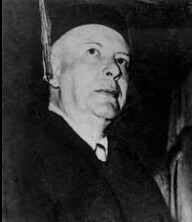
“O poeta é o sacerdote do invisível.”
The poet is the priest of the invisible
Opus Posthumous: Poems, Plays, Prose - Página 169, de Wallace Stevens, Samuel French Morse - Publicado por Knopf, 1957 - 300 páginas
“O poema deve resistir à inteligência / Quase com sucesso.”
The poem must resist the intelligence / Almost successfully
The palm at the end of the mind: selected poems and a play - Página 281, de Wallace Stevens - Publicado por Knopf, 1971 - 404 páginas
“Music falls on the silence like a sense,
A passion that we feel, not understand.”
Notes Toward a Supreme Fiction (1942), It Must Change
“The soul, he said, is composed
Of the external world.”
"Anecdote of Men by the Thousand"
The Man With the Blue Guitar (1937)
Notes Toward a Supreme Fiction (1942), It Must Be Abstract
Wallace Stevens livro Harmonium
"Thirteen Ways of Looking at a Blackbird"
Harmonium (1923)
Notes Toward a Supreme Fiction (1942), It Must Change
“Nothing had happened because nothing had changed.
Yet the General was rubbish in the end.”
Notes Toward a Supreme Fiction (1942), It Must Change
“Among twenty snowy mountains,
The only moving thing
Was the eye of the blackbird.”
Wallace Stevens livro Harmonium
"Thirteen Ways of Looking at a Blackbird" - Full text online http://boppin.com/poets/stevens.htm <br class="br"> "The Blackbird Is Flying, The Children Must Be Writing" Sam Swope http://www.samswope.org/work2.htm (an essay on the use of this poem as a teaching tool). <br class="br">Harmonium (1923)
Notes Toward a Supreme Fiction (1942), It Must Give Pleasure
Notes Toward a Supreme Fiction (1942), It Must Be Abstract
The Man With the Blue Guitar (1937)
The Man With the Blue Guitar (1937)
“A poem should be a part of one's sense of life.”
Opus Posthumous (1955), Adagia
Notes Toward a Supreme Fiction (1942), It Must Give Pleasure
“Each must the other take as sign, short sign
To stop the whirlwind, balk the elements.”
Notes Toward a Supreme Fiction (1942), It Must Give Pleasure
“These external regions, what do we fill them with
Except reflections”
Notes Toward a Supreme Fiction (1942), It Must Give Pleasure
Notes Toward a Supreme Fiction (1942), It Must Be Abstract
“A man and a woman
Are one.
A man and a woman and a blackbird
Are one.”
Wallace Stevens livro Harmonium
"Thirteen Ways of Looking at a Blackbird"
Harmonium (1923)
“The world is a force not a presence.”
Opus Posthumous (1955), Adagia
“I play. But this is what I think.”
The Man With the Blue Guitar (1937)
The Necessary Angel (1951), Imagination as Value
Notes Toward a Supreme Fiction (1942), It Must Give Pleasure
“He imposes orders as he thinks of them,
As the fox and snake do. It is a brave affair.”
Notes Toward a Supreme Fiction (1942), It Must Give Pleasure
“The first idea is an imagined thing.”
Notes Toward a Supreme Fiction (1942), It Must Be Abstract
Notes Toward a Supreme Fiction (1942), It Must Be Abstract
Wallace Stevens livro Harmonium
"On the Manner of Addressing Clouds"
Harmonium (1923)
“Sentimentality is a failure of feeling.”
Opus Posthumous (1955), Adagia


