“O poeta é o sacerdote do invisível.”
The poet is the priest of the invisible
Opus Posthumous: Poems, Plays, Prose - Página 169, de Wallace Stevens, Samuel French Morse - Publicado por Knopf, 1957 - 300 páginas
Wallace Stevens foi um poeta modernista norte-americano. Educado em Harvard e depois na New York Law School, trabalhou em uma companhia de seguros em Connecticut na maior parte de sua vida.
Seus poemas mais conhecidos incluem "Anedota de um jarro", "Desilusão das dez horas", "O Imperador do Sorvete", "A Ideia de Ordem em Key West", "Manhã de Domingo" e "Treze maneiras de olhar para um melro".
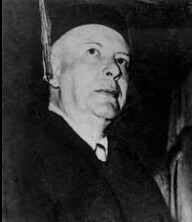
“O poeta é o sacerdote do invisível.”
The poet is the priest of the invisible
Opus Posthumous: Poems, Plays, Prose - Página 169, de Wallace Stevens, Samuel French Morse - Publicado por Knopf, 1957 - 300 páginas
“O poema deve resistir à inteligência / Quase com sucesso.”
The poem must resist the intelligence / Almost successfully
The palm at the end of the mind: selected poems and a play - Página 281, de Wallace Stevens - Publicado por Knopf, 1971 - 404 páginas
“We are the mimics. Clouds are pedagogues.”
Notes Toward a Supreme Fiction (1942), It Must Be Abstract
The Man With the Blue Guitar (1937)
“The poem goes form the poet’s gibberish to
The gibberish of the vulgate and back again.”
Notes Toward a Supreme Fiction (1942), It Must Change
Journal entry (20 June 1899); as published in Souvenirs and Prophecies: the Young Wallace Stevens (1977) edited by Holly Stevens, Ch. 3
“This is old song
That will not declare itself…”
Wallace Stevens livro Harmonium
"Metaphors of a Magnifico"
Harmonium (1923)
Notes Toward a Supreme Fiction (1942), It Must Give Pleasure
“It was enough for her that she remembered.”
Notes Toward a Supreme Fiction (1942), It Must Give Pleasure
“Success as a result of industry is a peasant ideal.”
As quoted in "Ten Jack-Offs" in The Most Beautiful Woman in Town (1983) by Charles Bukowski
Journal entry (20 April 1920); as published in Souvenirs and Prophecies: the Young Wallace Stevens (1977) edited by Holly Stevens, Ch. 6
“I am a native in this world
And think in it as a native thinks”
The Man With the Blue Guitar (1937)
“The poet is a god, or, the young poet is a god. The old poet is a tramp.”
Opus Posthumous (1955), Adagia
Opus Posthumous (1955)
“Poor, dear, silly Spring, preparing her annual surprise!”
Journal entry (4 March 1906); as published in Souvenirs and Prophecies: the Young Wallace Stevens (1977) edited by Holly Stevens, Ch. 8
“I like my philosophy smothered in beauty and not the opposite.”
As quoted in Wallace Stevens and the Limits of Reading and Writing (2002) by by Bart Eeckhout Ch. 12 "Poeticizing Epistemology", p. 268
“The world about us would be desolate except for the world within us.”
The Necessary Angel (1951), Imagination as Value
Wallace Stevens livro Harmonium
"Metaphors of a Magnifico"
Harmonium (1923)
“A breath upon her hand
Muted the night.
She turned —
A cymbal crashed,
Amid roaring horns.”
Peter Quince at the Clavier (1915)
“Life’s nonsense pierces us with strange relation.”
Notes Toward a Supreme Fiction (1942), It Must Be Abstract
“All history is modern history.”
Opus Posthumous (1955), Adagia
“Not to be realized because not to
Be seen, not to be loved nor hated because
Not to be realized.”
Notes Toward a Supreme Fiction (1942), It Must Be Abstract
“One thing remaining, infallible, would be
Enough.”
Wallace Stevens livro Harmonium
"The Well Dressed Man With a Beard"
Harmonium (1923)
“A fictive covering
Weaves always glistening from the heart and mind.”
Notes Toward a Supreme Fiction (1942), It Must Change
Notes Toward a Supreme Fiction (1942), It Must Change


