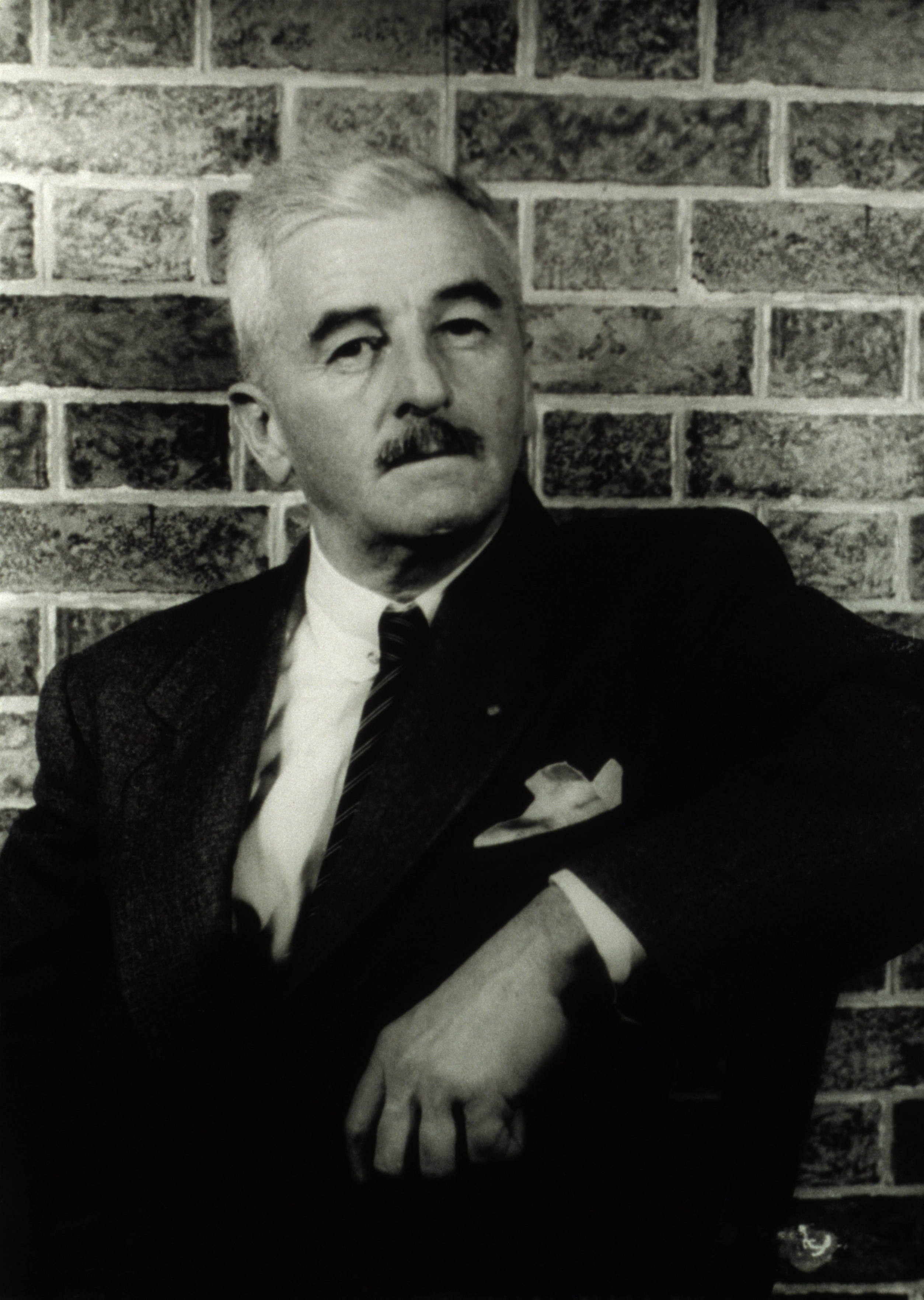
William Faulkner Frases famosas
Citações de mundo de William Faulkner
William Faulkner livro The Sound and the Fury
The Sound and the Fury
William Faulkner livro The Sound and the Fury
The Sound and the Fury
William Faulkner livro As I Lay Dying
As I Lay Dying
William Faulkner livro Santuário (romance)
Sanctuary
“É preciso duas pessoas para fazer alguém, e uma para morrer. É assim que o mundo vai acabar.”
William Faulkner livro As I Lay Dying
As I Lay Dying
Variante: é preciso duas pessoas para fazer alguém, e uma para morrer. é assim que o mundo vai acabar.
William Faulkner frases e citações
“Ele supunha que era à solidão que tentava escapar, e não a si mesmo.”
William Faulkner livro Luz em Agosto
He thought that it was loneliness which he was trying to escape and not himself.
"Light in August: the corrected text" - Página 226, William Faulkner - Vintage Books, 1985, ISBN 0679732268, 9780679732266 - 512 páginas
“Inteligência é capacidade que se tem de aceitar o que está ao redor.”
Variante: Inteligência é a capacidade de aceitar o que nos rodeia.
William Faulkner livro The Sound and the Fury
The Sound and the Fury
William Faulkner livro The Sound and the Fury
The Sound and the Fury
William Faulkner livro The Sound and the Fury
The Sound and the Fury
William Faulkner: Frases em inglês
William Faulkner livro The Town
Gavin Stevens in Ch. 15
The Town (1957)
“…between what did happen and what ought to happened, I dont never have trouble picking ought.”
William Faulkner livro The Town
V. K. Ratliff in Ch. 6
The Town (1957)
William Faulkner livro The Town
Gavin Stevens in Ch. 5
The Town (1957)
“Don Quixote — I read that every year, as some do the Bible.”
Paris Review interview (1958)
William Faulkner livro The Mansion
Fonte: The Mansion (1959), Ch. 16
Paris Review interview (1958)
William Faulkner livro The Town
Gavin Stevens in Ch. 17; also in this chapter Gavin Stevens reflects — twice — that men are "interested in facts too".
The Town (1957)
William Faulkner livro The Town
Gavin Stevens in Ch. 8
The two lines quoted — not altogether accurately — are from A. E. Housman, A Shropshire Lad (1896), XVIII:<p>And now the fancy passes by
And nothing will remain.
The Town (1957)
William Faulkner livro The Town
Gavin Stevens paraphrasing Eula Varner Snopes in Ch. 15
The Town (1957)
Paris Review interview (1958)
William Faulkner livro The Town
Eula Varner Snopes to Gavin Stevens in Ch. 15
The Town (1957)
William Faulkner livro The Town
Eula Varner Snopes to Gavin Stevens in Ch. 20
The Town (1957)
William Faulkner livro The Mansion
V. K. Ratliff about Gavin Stevens in Ch. 6
The Mansion (1959)
William Faulkner livro The Mansion
Charles Mallinson in Ch. 9
The Mansion (1959)
William Faulkner livro Requiem for a Nun
Act 2, sc. 1 http://books.google.com/books?id=EBMFAQAAIAAJ&q=%22Maybe+the+only+thing+worse+than+having+to+give+gratitude+constantly%22+%22is+having+to+accept+it%22&pg=PA155#v=onepage <br class="br">Requiem for a Nun (1951)
“…girls, women, are not interested in romance but only facts.”
William Faulkner livro The Town
Gavin Stevens to Eula Varner Snopes in Ch. 20
The Town (1957)
William Faulkner livro Requiem for a Nun
Last paragraph, Act 3, The Jail (Nor even yet quite relinquish —)
Requiem for a Nun (1951)
William Faulkner livro The Town
Gavin Stevens to V. K. Ratliff in Ch. 24
The Town (1957)
Paris Review interview (1958)
“…life is not so much motion as an inventless repetition of motion.”
William Faulkner livro The Mansion
Charles Mallinson in Ch. 8
The Mansion (1959)
William Faulkner livro The Town
Charles Mallinson in Ch. 19; Charles Mallinson's mother, Maggie, and his uncle, Gavin Stevens, besides being their parents' only children, are twins.
The Town (1957)
William Faulkner livro The Mansion
Charles Mallinson in Ch. 9. The date is summer 1938.
The Mansion (1959)
Paris Review interview (1958)
Nobel Prize acceptance speech (1950)
Nobel Prize acceptance speech (1950)
William Faulkner livro Intruder in the Dust
The opening sentence of the novel, Ch. 1
Intruder in the Dust (1948)
William Faulkner livro Go Down, Moses
Delta Autumn (p. 347)
Go Down, Moses (1942)