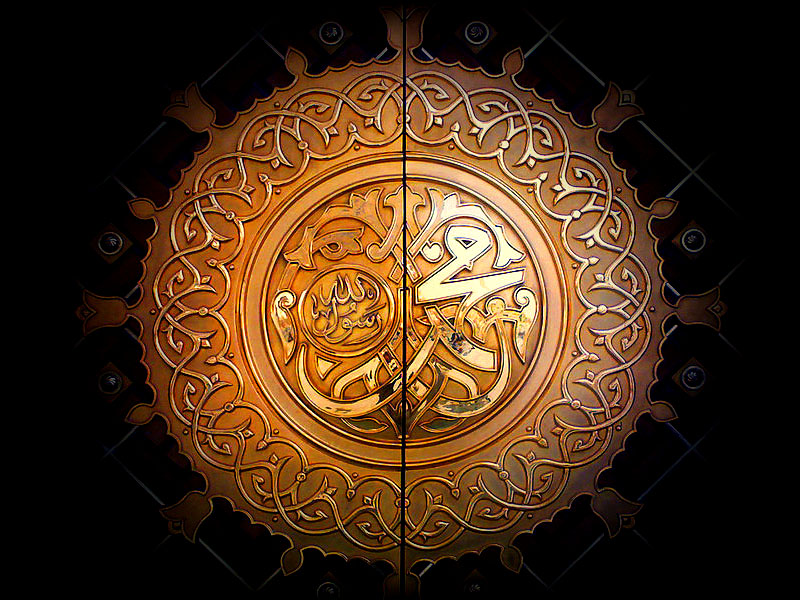
Frases de Maomé
página 5

Abū al-Qāsim Muḥammad ibn ʿAbd Allāh ibn ʿAbd al-Muṭṭalib ibn Hāshim, mais conhecido como Maomé foi um líder religioso e político árabe. Segundo a religião islâmica, Maomé é o mais recente e último profeta do Deus de Abraão.

Para os muçulmanos, Maomé, foi precedido em seu papel de profeta por Jesus, Moisés, Davi, Jacó, Isaac, Ismael e Abraão. Como figura política, ele unificou várias tribos árabes, o que permitiu as conquistas árabes daquilo que viria a ser um império islâmico que se estendeu da Pérsia até à Península Ibérica.

Não é considerado pelos muçulmanos como um ser divino, mas sim, um ser humano; contudo, entre os fiéis, ele é visto como um dos mais perfeitos seres humanos.[carece de fontes?]

Nascido em Meca, Maomé foi durante a primeira parte da sua vida um mercador que realizou extensas viagens no contexto do seu trabalho. Tinha por hábito retirar-se para orar e meditar nos montes perto de Meca. Os muçulmanos acreditam que em 610, quando Maomé tinha quarenta anos, enquanto realizava um desses retiros espirituais numa das cavernas do Monte Hira, foi visitado pelo anjo Gabriel que lhe ordenou que recitasse os versos enviados por Deus, e comunicou que Deus o havia escolhido como o último profeta enviado à humanidade. Maomé deu ouvidos à mensagem do anjo e, após sua morte, estes versos foram reunidos e integrados no Alcorão, durante o califado de Abu Bakr.

Maomé não rejeitou completamente o judaísmo e o cristianismo, duas religiões monoteístas já conhecidas pelos árabes. Em vez disso, declarou que é necessária proteção a estas religiões e informou que tinha sido enviado por Deus para restaurar os ensinamentos originais destas religiões, que tinham sido corrompidos e esquecidos.

Muitos habitantes de Meca rejeitaram a sua mensagem e começaram a persegui-lo, bem como aos seus seguidores. Em 622 Maomé foi obrigado a abandonar Meca, numa migração conhecida como a Hégira , tendo se mudado para Yathrib . Nesta cidade, Maomé tornou-se o chefe da primeira comunidade muçulmana. Seguiram-se uns anos de batalhas entre os habitantes de Meca e Medina, que resultaram em geral na vitória de Maomé e de seus seguidores. A organização militar criada durante estas batalhas foi usada para derrotar as tribos da Arábia. Por altura da sua morte, Maomé tinha unificado praticamente todo o território sob o signo de uma nova religião, o islão.

✵ 570 – 8. Junho 632
Maomé photo
Maomé: 330 citações211 Curtidas

Maomé Frases famosas

Maomé frases e citações

“Busca conhecimento do berço à sepultura”

Maomé

Fonte: "Maomé, 274"

“É preferível andar sozinho do que na companhia dos maus”

Maomé

Fonte: "Maomé, 170"

Maomé: Frases em inglês

“It has been reported from Sulaiman b. Buraid through his father that when the Messenger of Allah (may peace be upon him) appointed anyone as leader of an army or detachment he would especially exhort him to fear Allah and to be good to the Muslims who were with him. He would say: Fight in the name of Allah and in the way of Allah. Fight against those who disbelieve in Allah. Make a holy war, do not embezzle the spoils; do not break your pledge; and do not mutilate (the dead) bodies; do not kill the children. When you meet your enemies who are polytheists, invite them to three courses of action. If they respond to any one of these, you also accept it and withold yourself from doing them any harm. Invite them to (accept) Islam; if they respond to you, accept it from them and desist from fighting against them. Then invite them to migrate from their lands to the land of Muhajirs and inform them that, if they do so, they shall have all the privileges and obligations of the Muhajirs. If they refuse to migrate, tell them that they will have the status of Bedouin Muslims and will be subjected to the Commands of Allah like other Muslims, but they will not get any share from the spoils of war or Fai' except when they actually fight with the Muslims (against the disbelievers). If they refuse to accept Islam, demand from them the Jizya. If they agree to pay, accept it from them and hold off your hands. If they refuse to pay the tax, seek Allah's help and fight them. When you lay siege to a fort and the besieged appeal to you for protection in the name of Allah and His Prophet, do not accord to them the guarantee of Allah and His Prophet, but accord to them your own guarantee and the guarantee of your companions for it is a lesser sin that the security given by you or your companions be disregarded than that the security granted in the name of Allah and His Prophet be violated When you besiege a fort and the besieged want you to let them out in accordance with Allah's Command, do not let them come out in accordance with His Command, but do so at your (own) command, for you do not know whether or not you will be able to carry out Allah's behest with regard to them.”

Muhammad

Sahih Muslim, Book 019, Number 4294
Sunni Hadith

“Malik related to me from Abdullah ibn Dinar from Abdullah ibn Umar that the Messenger of Allah, may Allah bless him and grant him peace, said, "If a man says to his muslim brother, 'O kafir!'”

Muhammad

it is true about one of them.&quot; <br class="br">Muwatta of Imam Malik, Speech, hadith 1 http://ahadith.co.uk/permalink-hadith-4899 <br class="br">Sunni Hadith <br class="br">Variante: Malik related to me from &#x27;Abdullah ibn Dinar from &#x27;Abdullah ibn &#x27;Umar that the Messenger of Allah, may Allah bless him and grant him peace, said, &quot;If a man says to his Muslim brother, &#x27;O unbeliever!&#x27; it is true about one of them.&quot;

“Allah's Apostle said, "There is no Zakat either on a horse or a slave belonging to a Muslim"”

Muhammad

Narrated Abu Huraira, in Bukhari, Volume 2, Book 24, Number 542
Sunni Hadith

“Al-Hasan ibn 'Ali said, "I memorised from the Messenger of Allah, may Allah bless him and grant him peace, 'Leave what gives you doubt for what gives you no doubt.'"”

Muhammad

Riyadh-as-Saliheen by Imam Al-Nawawi, volume 4, hadith number 593
Sunni Hadith
Variante: Al-Hasan ibn 'Ali said, "I memorised from the Messenger of Allah, may Allah bless him and grant him peace, 'Leave what gives you doubt for what gives you no doubt.'"

“'A'isha reported that the Messenger of Allah, may Allah bless him and grant him peace, said, "Allah is kind and loves kindness in every matter."”

Muhammad

Riyadh-as-Saliheen by Imam Al-Nawawi, volume 4, hadith number 633
Sunni Hadith
Variante: Anas reported that the Prophet, may Allah bless him and grant him peace, said, "O Allah, there is no life but the life of the Next World."

“Abu Hurayra reported that the Prophet, may Allah bless him and grant him peace, said, "A good word is sadaqa."”

Muhammad

Riyadh-as-Saliheen by Imam Al-Nawawi, volume 4, hadith number 694
Sunni Hadith

“Allah's Apostle called: "War is deceit."”

Muhammad

Narrated Abu Huraira, in Bukhari, Volume 4, Book 52, Number 268
Sunni Hadith

“Fear Allah and treat your children [small or grown] fairly (with equal justice).”

Muhammad

Al-Bukhari and Muslim [citation needed]
Sunni Hadith

Autores parecidos

Francisco de Assis photo
Francisco de Assis36
santo católico fundador da Ordem Franciscana None
Anselmo de Cantuária photo
Anselmo de Cantuária4
Teólogo, filósofo e arcebispo da Cantuária na Idade Média None
Gengis Khan photo
Gengis Khan4
imperador mongol None
Boécio photo
Boécio4
None
Dante Alighieri photo
Dante Alighieri75
italiano autor da epopéia, A divina comédia, considerado um… None