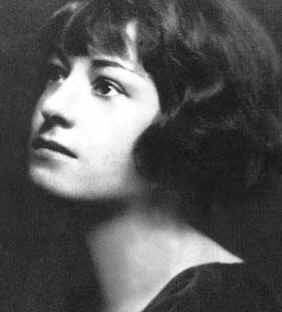
Dorothy Parker Frases famosas
“Brevidade é a alma da lingerie.”
Legenda escrita para "Vogue" 1916; citado por Alexander Woollcott: While Rome Burns "Our Mrs Parker" (1934)
Ela propôs o epitáfio para si mesma, citado na Vanity Fair (Junho 1925)
“Não são as tragédias que nos matam, são as confusões.”
It's not the tragedies that kill us, it's the messes.
Dorothy Parker in her own words - página 80, Dorothy Parker, Barry Day - Taylor Trade Pub., 2004, ISBN 1589790715, 9781589790711 - 203 páginas
“Salário não é objeto: quero apenas o suficiente para manter o corpo e alma separados.”
Salary is no object; I want only enough to keep body and soul apart.
Constant Reader - página 59, Dorothy Parker - Viking Press, 1927, ISBN 067023916X, 9780670239160 - 157 páginas
“Os homens raras vezes tomam liberdades com mulheres que usam óculos.”
Men seldom make passes at girls who wear glasses
Not much fun: the lost poems of Dorothy Parker - página 32, Dorothy Parker, Stuart Y. Silverstein, Dorothy Parker - Scribner, 1996 - 256 páginas
Dorothy Parker frases e citações
“Não se pode ensinar a um velho dogma novos truques.”
You can't teach an old dogma new tricks .
citada em Western water shortage? - página 92, Roy Nels Vernström, Kish J. Sharma - Nero and Associates, 1984 - 114 páginas
Atribuídas
“A cura para o tédio é curiosidade. Não há cura para a curiosidade.”
The cure for boredom is curiosity. There is no cure for curiosity
citado em Business research methods - página 111, William G. Zikmund, William G. Zikmund - Thomson/South-Western, 2003, ISBN 0030350840, 9780030350849 - 748 páginas
amplamente atribuido a Dorothy Parker e Ellen Parr, mas a origem é desconhecida.
Atribuídas
“Essa mulher fala dezoito línguas, e não pode dizer não em qualquer uma delas.”
That woman speaks eighteen languages, and can't say No in any of them.
citado por Alexander Voollcott no ensaio biográfico "Our Mrs Parker" (1934)
Atribuídas
Dorothy Parker: Frases em inglês
“Bewildered is the fox who lives to find that grapes beyond reach can be really sour.”
Fonte: The Collected Dorothy Parker
Her "Constant Reader" book review of The House at Pooh Corner by A. A. Milne, in The New Yorker (20 October 1928) http://www.newyorker.com/magazine/1928/10/20/reading-and-writing-27
Dorothy Parker: Complete Broadway, 1918–1923 (2014) https://openlibrary.org/books/OL25758762M/Dorothy_Parker_Complete_Broadway_1918-1923, Chapter 2: 1919
“The cure for boredom is curiosity. There is no cure for curiosity.”
Widely attributed to Dorothy Parker and to Ellen Parr, but the origin is unknown.
Attributed
Dorothy Parker: Complete Broadway, 1918–1923 (2014) https://openlibrary.org/books/OL25758762M/Dorothy_Parker_Complete_Broadway_1918-1923, Chapter 4: 1921
“They exude an atmosphere of The New Republic—a sort of Crolier-than-thou air. p. 36”
Dorothy Parker: Complete Broadway, 1918–1923 (2014) https://openlibrary.org/books/OL25758762M/Dorothy_Parker_Complete_Broadway_1918-1923, Chapter 1: 1918
“Katharine Hepburn delivered a striking performance that ran the gamut of emotions, from A to B.”
Woollcott writes in While Rome Burns that Parker had "recently...achieved an equal compression in reporting on The Lake, Miss Hepburn, it seems, had run the whole gamut from A to B." These words do not appear in Dorothy Parker's 1934 printed review of The Lake, but were elsewhere described as a spoken remark. "'We might as well go back,' said Dorothy Parker during an intermission of The Lake in 1934, 'and watch Katharine Hepburn run the gamut of emotions from A to B.'"
"Hepburn From A to B : Close-up of a Stage Struck Youngster" by Alan Jackson, in Cinema Arts Vol. 1 No. 2, (July 1937)
Our Mrs Parker (1934)
Dorothy Parker: Complete Broadway, 1918–1923 (2014) https://openlibrary.org/books/OL25758762M/Dorothy_Parker_Complete_Broadway_1918-1923, Chapter 5: 1922
“This is not a novel to be tossed aside lightly. It should be thrown with great force.”
Quoted in The Algonquin Wits (1968) edited by Robert E. Drennan, and The Dispatch http://news.google.com/newspapers?id=r04cAAAAIBAJ&sjid=WFEEAAAAIBAJ&pg=7250,5269688&dq=aside-lightly+dorothy-parker&hl=en (October 1962). As noted at Snopes, Drennan's source seems to be a Parker review which does not seem to contain this quote. If Parker wrote this statement anywhere the primary source seems to have gone missing. <br class="br">The earliest attribution of this quote was published in the February 1960 Readers' Digest, and credited to a book review by Sid Ziff in the Los Angeles Mirror-News, which existed from 1955 to 1960. This is a little odd, considering that Sid Ziff was a sports columnist; the reference in Readers' Digest has been confirmed but the quote from the Mirror-News has not - see Quote Investigator http://quoteinvestigator.com/2013/03/26/great-force/#more-5787 for details. <br class="br">Misattributed
Interview in The Paris Review, Issue #13 http://books.google.com/books?id=iZt6sBaHemQC&q=&quot;all+those+writers+who+write+about+their+childhood+gentle+god+if+i+wrote+about+mine+you+wouldn't+sit+in+the+same+room+with+me&quot;&pg=PA8#v=onepage (Summer 1956)
Dorothy Parker: Complete Broadway, 1918–1923 (2014) https://openlibrary.org/books/OL25758762M/Dorothy_Parker_Complete_Broadway_1918-1923, Chapter 5: 1922
Dorothy Parker: Complete Broadway, 1918–1923 (2014) https://openlibrary.org/books/OL25758762M/Dorothy_Parker_Complete_Broadway_1918-1923, Chapter 1: 1918
“And she had It. It, hell; she had Those.”
Regarding a character in Elinor Glyn's novel It; in her review, "Madame Glyn Lectures on 'It,' with Illustrations" in The New Yorker (26 November 1927)
“A lady … with all the poise of the Sphinx though but little of her mystery.”
Concerning a child actress in A. A. Milne's play Give Me Yesterday; in her review of same, "Just Around Pooh Corner" in The New Yorker (14 March 1931)
Dorothy Parker: Complete Broadway, 1918–1923 (2014) https://openlibrary.org/books/OL25758762M/Dorothy_Parker_Complete_Broadway_1918-1923, Chapter 1: 1918
“And I'll stay away from Verlaine too; he was always chasing Rimbauds.”
"The Little Hours" in Here Lies (1939); this plays on the title of the popular song "I'm Always Chasing Rainbows"; Paul Verlaine was Arthur Rimbaud's lover.
"When We Were Very Sore (Lines on Discovering That You Have Been Advertised as America's A. A. Milne)", first printed in New York World (10 March 1927) p. 15; based on A. A. Milne's "Happiness"
Not Much Fun: The Lost Poems of Dorothy Parker (1996)
Fonte: Dorothy Parker: Complete Broadway, 1918–1923 (2014) https://openlibrary.org/books/OL25758762M/Dorothy_Parker_Complete_Broadway_1918-1923, Chapter 2: 1919, p.89
Fonte: Dorothy Parker: Complete Broadway, 1918–1923 (2014) https://openlibrary.org/books/OL25758762M/Dorothy_Parker_Complete_Broadway_1918-1923, Chapter 2: 1919, p. 82
Dorothy Parker: Complete Broadway, 1918–1923 (2014) https://openlibrary.org/books/OL25758762M/Dorothy_Parker_Complete_Broadway_1918-1923, Chapter 2: 1919
Dorothy Parker: Complete Broadway, 1918–1923 (2014) https://openlibrary.org/books/OL25758762M/Dorothy_Parker_Complete_Broadway_1918-1923, Chapter 5: 1922
Fonte: Dorothy Parker: Complete Broadway, 1918–1923 (2014) https://openlibrary.org/books/OL25758762M/Dorothy_Parker_Complete_Broadway_1918-1923, Chapter 5: 1922, p. 260
"Our Lady of the Loudspeaker" in The New Yorker (25 February 1928)
Quoted in Writers at Work 1st Series by Malcolm Cowley (1958)


