Philip Roth livro A Mancha Humana
The Human Stain
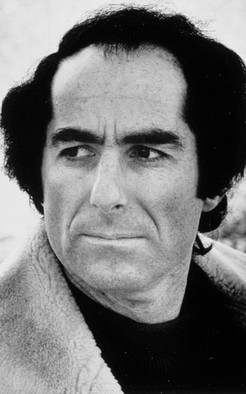
Philip Milton Roth é um romancista norte-americano de origem judaica, considerado um dos maiores escritores norte-americanos da segunda metade do século XX. É conhecido sobretudo pelos romances, embora também tenha escrito contos e ensaios.
Entre as suas obras mais conhecidas encontra-se a colecção de contos «Goodbye, Columbus», de 1959, a novela «O complexo de Portnoy» , e a sua trilogia americana, publicada na década de 1990, composta pelas novelas «Pastoral Americana» , «Casei com um comunista» e «A Mancha humana» .
Muitas das suas obras reflectem os problemas de assimilação e identidade dos judeus dos Estados Unidos, o que o vincula a outros autores estado-unidenses como Saul Bellow, laureado com o Nobel de Literatura de 1976, ou Bernard Malamud, que também tratam nas suas obras a experiência dos judeus norte-americanos.
Grande parte da obra de Roth explora a natureza do desejo sexual e a autocompreensão. A marca registrada da sua ficção é o monólogo íntimo, dito com um humor amotinado e a energia histérica por vezes associada com as figuras do herói e narrador de «O complexo de Portnoy», a obra que o tornou conhecido.
Recebeu o Prémio Pulitzer de Ficção por Pastoral Americana em 1998. É conhecido sobretudo por seu alter-ego, Nathan Zuckerman protagonista de diversos de seus livros. É o único autor americano a ter suas obras completas publicadas em vida pela Library of America, que tem como missão editorial preservar as obras consideradas como parte da herança cultural americana .
Foi galardoado com o prestigioso Prémio Internacional Man Booker em 2011 .
Em 2012, Roth foi o vencedor do Prêmio Príncipe das Astúrias de Literatura . Em outubro do mesmo ano, em entrevista à revista francesa Les Inrockutibles , anuncia que abandona a carreira de escritor, sendo Nêmesis o seu ultimo trabalho .
Está se dedicando na produção da sua biografia, que está sendo escrita por Blake Bailey .
Philip Roth livro A Mancha Humana
The Human Stain
sobre o candidato republicano à Presidência dos EUA
Fonte: Revista IstoÉ Edição 1617
Philip Roth livro Portnoy's Complaint
Portnoy's Complaint
Philip Roth livro A Mancha Humana
The Human Stain
Philip Roth livro A Mancha Humana
The Human Stain
Philip Roth livro A Mancha Humana
The Human Stain
Philip Roth livro A Mancha Humana
The Human Stain
Philip Roth livro Portnoy's Complaint
Portnoy's Complaint
Philip Roth livro The Ghost Writer
The Ghost Writer
Philip Roth livro A Mancha Humana
The Human Stain
Philip Roth livro A Mancha Humana
The Human Stain
Philip Roth livro Portnoy's Complaint
Portnoy's Complaint
Philip Roth livro A Mancha Humana
The Human Stain
Philip Roth livro A Mancha Humana
The Human Stain
Philip Roth livro A Mancha Humana
The Human Stain
Philip Roth livro A Mancha Humana
The Human Stain
Philip Roth livro A Mancha Humana
The Human Stain
Philip Roth livro A Mancha Humana
The Human Stain
Philip Roth livro Nemesis
Nemesis
Philip Roth livro A Mancha Humana
The Human Stain
Philip Roth livro A Mancha Humana
The Human Stain
Philip Roth livro A Mancha Humana
The Human Stain
Philip Roth livro A Mancha Humana
The Human Stain
Philip Roth livro A Mancha Humana
The Human Stain
Philip Roth livro A Mancha Humana
The Human Stain
Philip Roth livro Portnoy's Complaint
Portnoy's Complaint
Philip Roth livro A Mancha Humana
The Human Stain
Philip Roth livro A Mancha Humana
The Human Stain
Philip Roth livro A Mancha Humana
The Human Stain
Philip Roth livro Portnoy's Complaint
Portnoy's Complaint
Philip Roth livro A Mancha Humana
The Human Stain
Philip Roth livro A Mancha Humana
The Human Stain
Philip Roth livro Portnoy's Complaint
Portnoy's Complaint (1969)
Philip Roth livro The Counterlife
Fonte: The Counterlife (1986), Ch. 5
“…her breasts swam towards me like two pink-nosed fish and she let me hold them.”
Philip Roth livro Goodbye, Columbus
Fonte: Goodbye, Columbus (1959), Chapter 2
Philip Roth livro The Counterlife
Fonte: The Counterlife (1986), Ch. 5
Paris Review Interview (1986)
“Oh Patimkin! Fruit grew in their refrigerator and sporting goods dropped from their trees!”
Philip Roth livro Goodbye, Columbus
Goodbye, Columbus (1959)
Philip Roth livro Portnoy's Complaint
Portnoy's Complaint (1969)
Philip Roth livro The Counterlife
Fonte: The Counterlife (1986), Ch. 5
Philip Roth livro The Facts: A Novelist's Autobiography
Opening letter to Nathan Zuckerman.
Referring to the life of a fiction writer
The Facts: A Novelist's Autobiography (1988)
Philip Roth livro The Dying Animal
The Dying Animal (2001)
Philip Roth livro Portnoy's Complaint
Part 5: "Cunt Crazy"
Portnoy's Complaint (1969)
Philip Roth livro The Facts: A Novelist's Autobiography
Opening letter to Nathan Zuckerman
The Facts: A Novelist's Autobiography (1988)
“Should he ever write an autobiography, he'd call it The Life and Death of a Male Body.”
Philip Roth livro Homem Comum
Everyman (2006)
Philip Roth livro The Dying Animal
Well, that "sir" is transformed into "young lady" when I see them in class.
The Dying Animal (2001)
Philip Roth livro The Dying Animal
The Dying Animal (2001)
On criticism of his writing, as quoted in "The Unbounded Spirit of Philip Roth" http://www.nytimes.com/books/98/10/11/specials/roth-unbounded.html?_r=1&oref=slogin, interview with Mervyn Rothstein, The New York Times (1 August 1985), Late City Final Edition, section C, page 13, column 1
Paris Review Interview (1986)
Philip Roth livro The Dying Animal
Fonte: The Dying Animal (2001)
Philip Roth livro Portnoy's Complaint
Fonte: Portnoy's Complaint (1969), Ch. 4: "The Most Prevalent Form of Degradation in Erotic Life"
Philip Roth livro The Facts: A Novelist's Autobiography
Nathan Zuckerman to Philip Roth
The Facts: A Novelist's Autobiography (1988)
Paris Review Interview (1986)
"The Ghosts of Roth," interview with Alan Finkielkraut, Esquire (September 1981)
Philip Roth livro Portnoy's Complaint
Portnoy's Complaint (1969)
As quoted in "Roth on Trump" by Judith Thurman, in The New Yorker (30 January 2017), p. 17
Paris Review Interview (1986)
Philip Roth livro Exit Ghost
Exit Ghost (2007)
I don't need that question answered.
Paris Review Interview (1986)
Philip Roth livro Homem Comum
Everyman (2006)
Philip Roth livro Sabbath's Theater
Was it taking place elsewhere? But how then can looking out of this window be so gigantically real? Well, that is the difference between the true and the real. We don't get to live in the truth. That's why Nikki ran away. She was an idealist, an innocent, touching, talented illusionist who wanted to live in the truth. Well, if you found it, kid, you're the first. In my experience the direction of life is toward incoherence — precisely what you would never confront. Maybe that was the only coherent thing you could think to do: die to deny incoherence.
Sabbath's Theater (1995)
Writing About Jews (1963)


