Friedrich August Kekulé von Stradonitz
BOYD, E.; MORRISON, R. Mol. In:______. Química orgânica. 12. ed. Lisboa: Fundacao Calouste Gulbenkian, 1995. cap. 14.3, p. 701.
Friedrich August Kekulé foi um químico alemão. Inovou o emprego de fórmulas desenvolvidas em química orgânica, criou em 1857, a Teoria da Tetracovalência do carbono, criou hipótese das ligações múltiplas e propôs, em 1865, após um sonho que teve, a fórmula hexagonal do benzeno.
Friedrich August Kekulé Von Stradonitz nasceu em 7 de setembro de 1829 em Darmstadt, Alemanha. Família descendente de uma linha Tcheca, nobre família da Boêmia. Quando jovem seus hobbies eram caminhadas botânicas, recolhendo e desenhando borboletas. Iniciou seus estudos no ginásio de Darmstadt, sempre um bom aluno com aptidão para línguas, isso resultou na capacidade de falar francês, italiano e inglês, bem como se alemão nativo. Tinha interesse por ginásticas, danças e malabarismo, além do talento em mímicas. Tinha talento para desenho, assim tinha a intenção se tornar um arquiteto.
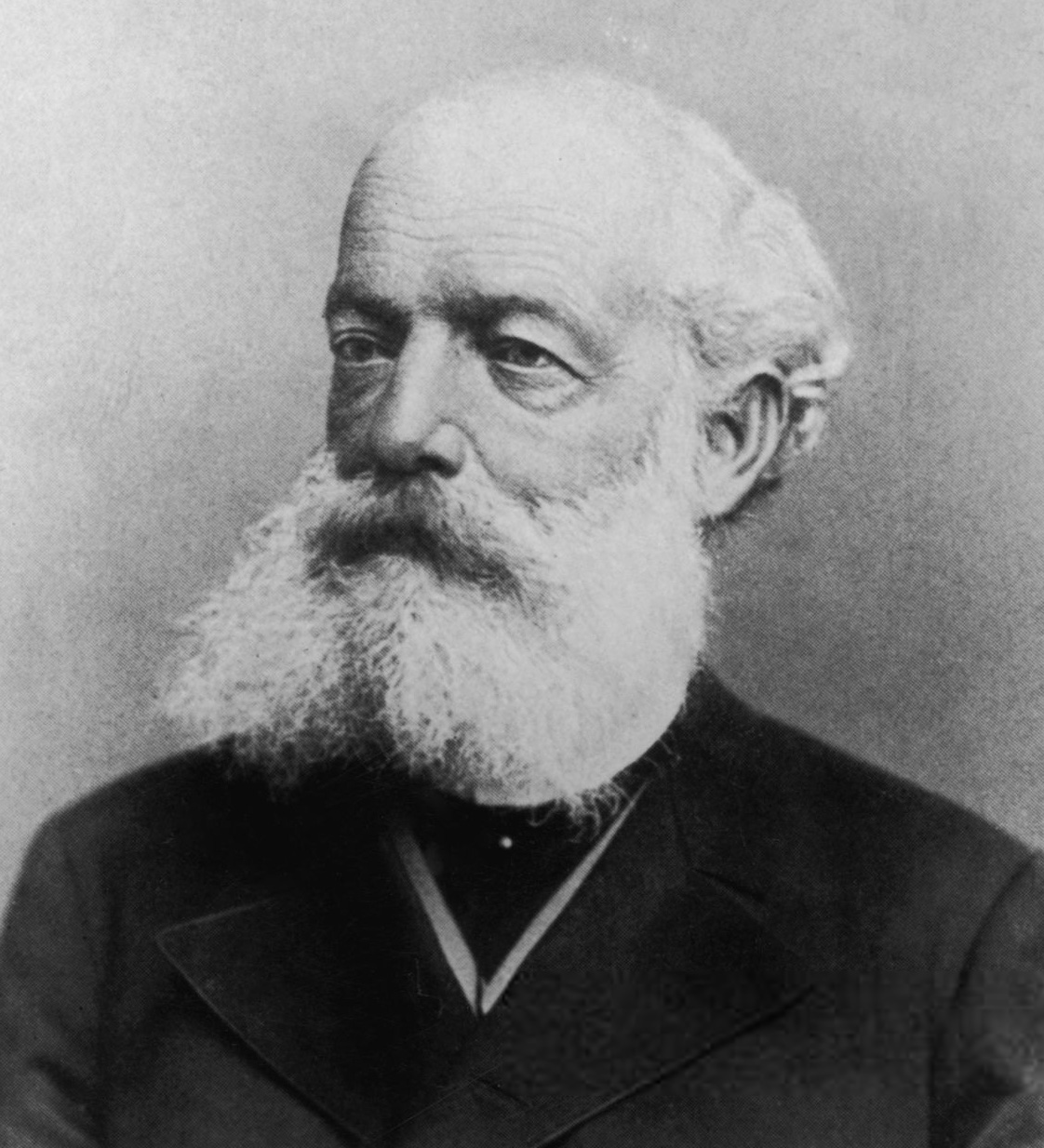
Friedrich August Kekulé von Stradonitz
BOYD, E.; MORRISON, R. Mol. In:______. Química orgânica. 12. ed. Lisboa: Fundacao Calouste Gulbenkian, 1995. cap. 14.3, p. 701.
“I fell into a reverie, and lo, the atoms were gamboling before my eyes.”
Statements about a reverie in 1854 (1890), as quoted in "The Experimental Basis of Kekulé's Valence Theory" by Erwin N. Hiebert, in Journal of Chemical Education (1959)<!-- , 36, pp. 321-328 -->
Contexto: I fell into a reverie, and lo, the atoms were gamboling before my eyes. Whenever, hitherto, these diminutive beings had appeared to me, they had always been in motion. Now, however, I saw how, frequently, two smaller atoms united to form a pair: how a larger one embraced the two smaller ones; how still larger ones kept hold of three or even four of the smaller: whilst the whole kept whirling in a giddy dance. I saw how the larger ones formed a chain, dragging the smaller ones after them but only at the ends of the chains.
Account of his famous dream of the benzene structure, as quoted in A Life of Magic Chemistry : Autobiographical Reflections of a Nobel Prize Winner (2001) by George A. Olah, p. 54<!-- also partially quoted in Serendipity, Accidental Discoveries in Science (1989) by Royston M. Roberts , pp. 75-81 -->
Contexto: I was sitting writing on my textbook, but the work did not progress; my thoughts were elsewhere. I turned my chair to the fire and dozed. Again the atoms were gamboling before my eyes. This time the smaller groups kept modestly in the background. My mental eye, rendered more acute by the repeated visions of the kind, could now distinguish larger structures of manifold conformation; long rows sometimes more closely fitted together all twining and twisting in snake-like motion. But look! What was that? One of the snakes had seized hold of its own tail, and the form whirled mockingly before my eyes. As if by a flash of lightning I awoke; and this time also I spent the rest of the night in working out the consequences of the hypothesis. Let us learn to dream, gentlemen, and then perhaps we shall learn the truth... but let us beware of publishing our dreams before they have been put to the proof by the waking understanding.
“One of the snakes had seized hold of its own tail, and the form whirled mockingly before my eyes.”
Account of his famous dream of the benzene structure, as quoted in A Life of Magic Chemistry : Autobiographical Reflections of a Nobel Prize Winner (2001) by George A. Olah, p. 54<!-- also partially quoted in Serendipity, Accidental Discoveries in Science (1989) by Royston M. Roberts , pp. 75-81 -->
Contexto: I was sitting writing on my textbook, but the work did not progress; my thoughts were elsewhere. I turned my chair to the fire and dozed. Again the atoms were gamboling before my eyes. This time the smaller groups kept modestly in the background. My mental eye, rendered more acute by the repeated visions of the kind, could now distinguish larger structures of manifold conformation; long rows sometimes more closely fitted together all twining and twisting in snake-like motion. But look! What was that? One of the snakes had seized hold of its own tail, and the form whirled mockingly before my eyes. As if by a flash of lightning I awoke; and this time also I spent the rest of the night in working out the consequences of the hypothesis. Let us learn to dream, gentlemen, and then perhaps we shall learn the truth... but let us beware of publishing our dreams before they have been put to the proof by the waking understanding.
Account of his famous dream of the benzene structure, as quoted in A Life of Magic Chemistry : Autobiographical Reflections of a Nobel Prize Winner (2001) by George A. Olah, p. 54


