“And hand in hand, on the edge of the sand,
They danced by the light of the moon.”
Edward Lear The Owl and the Pussycat
Fonte: The Owl and the Pussycat
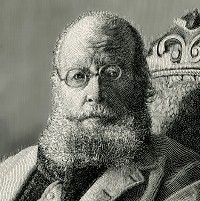
Edward Lear foi um pintor e escritor inglês.
Em 1831 começou a trabalhar como ilustrador para a Zoological Society of London e depois para o Museu Britânico. Em 1835 passou a pintar também paisagens de modo minucioso. Publicou sete livros de viagens com ilustrações suas e três livros com desenhos de animais. Também pintava a óleo, mostrando influência do pré-rafaelismo.
Em 1846 deu lições de desenho à Rainha Vitória e escreveu seu primeiro Book of Nonsense, iniciando sua carreira literária na qual viria a se distinguir por desenvolver uma forma original de poemas de humor e absurdo e também por divulgar o limerick .
Publicou três livros de poemas nonsense ilustrados com figuras fantásticas e nos quais seu gênio se manifesta plenamente: Nonsense Songs, Stories, Botany and Alphabets , More Nonsense Pictures, Rhymes, Botany etc e Laughable Lyrics .
Ele é citado na música Paperback Writer, escrita por John Lennon e Paul McCartney, lançada em um single dos The Beatles em 1966. A linha diz "It´s based on a novel, by a man named Lear".
“And hand in hand, on the edge of the sand,
They danced by the light of the moon.”
Edward Lear The Owl and the Pussycat
Fonte: The Owl and the Pussycat
Book of Nonsense http://www.gutenberg.org/dirs/etext97/nnsns10.txt, Limerick 1 (1846).
" The Jumblies http://www.nonsenselit.org/Lear/ns/jumblies.html", st. 1, in Nonsense Songs, Stories, Botany, and Alphabets (1871).
Edward Lear The Owl and the Pussycat
St. 3.
Fonte: The Owl and the Pussycat (1871)
The Dong with the Luminous Nose http://www.nonsenselit.org/Lear/ll/dln.html, st. 1 (1877).
“They sailed away for a year and a day
To the land where the bong-tree grows.”
Edward Lear The Owl and the Pussycat
St. 2.
The Owl and the Pussycat (1871)
The Pobble Who Has No Toes http://www.nonsenselit.org/Lear/ll/pobble.html, st. 1 (1877).
St. 1. <br class="br"> The Courtship of the Yonghy-Bongy-Bò http://www.nonsenselit.org/Lear/ll/ybb.html (1877)
St. 5. <br class="br"> The Courtship of the Yonghy-Bongy-Bò http://www.nonsenselit.org/Lear/ll/ybb.html (1877)
St. 2. <br class="br"> The Courtship of the Yonghy-Bongy-Bò http://www.nonsenselit.org/Lear/ll/ybb.html (1877)
How Pleasant to Know Mr. Lear http://www.nonsenselit.org/Lear/pw/mrlear.html, st. 1 (1871).
But his shoes were far too tight. <br class="br"> Incidents in the Life of my Uncle Arly http://www.nonsenselit.org/Lear/pw/arly.html, st. 7 (1895).
The Quangle Wangle's Hat http://www.nonsenselit.org/Lear/ll/quangle.html, st. 1 (1877).
" The Jumblies http://www.nonsenselit.org/Lear/ns/jumblies.html", st. 1, in Nonsense Songs, Stories, Botany, and Alphabets (1871).
“Who, or why, or which, or what,
Is the Akond of Swat?”
The Akond of Swat http://www.nonsenselit.org/Lear/ll/akond.html, l. 1 (1877).
Calico Pie http://www.nonsenselit.org/Lear/ns/calico.html, st. 1 (1871).
“It's a fact the whole world knows,
That Pebbles are happier without their toes.”
The Pobble Who Has No Toes, st. 6.
The Pelican Chorus http://www.nonsenselit.org/Lear/ll/pelican.html, chorus (1877).
“"Dear pig, are you willing to sell for one shilling
Your ring?" Said the Piggy, "I will."”
Edward Lear The Owl and the Pussycat
St. 3.
The Owl and the Pussycat (1871)


