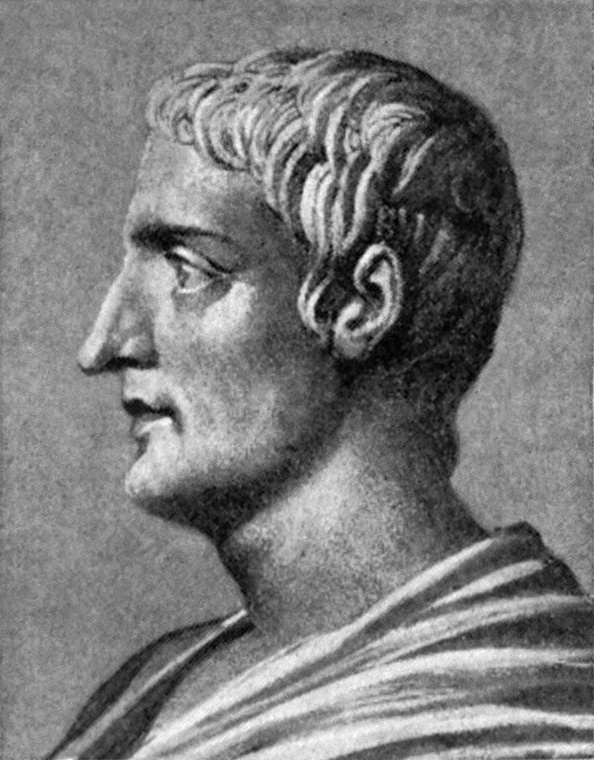
Publius Cornelius Tacitus Frases famosas
Publius Cornelius Tacitus frases e citações
Variante: A mais injusta condição das guerras está no fato de que todos se atribuem o mérito das proezas, enquanto as derrotas são sempre atribuídas a uma única pessoa.
Nam utilissimus idem ac brevissimus bonarum molarumque rerum delectus est cogitare, quid aut volueris sub alio Principe aut nolueris.
Tácito: Historiarum, Liv. I, Cap. XVI [tradução de Paulo Neves]
Publius Cornelius Tacitus: Frases em inglês
Tacitus livro Germania
Fonte: Germania (98), Chapter 36
“Indeed, when a ruler once becomes unpopular, all his acts, be they good or bad, tell against him.”
Tacitus livro Histories
Book I, 7
Histories (100-110)
“No one in Germany laughs at vice, nor do they call it the fashion to corrupt and to be corrupted.”
Tacitus livro Germania
Fonte: Germania (98), Chapter 19
“To ravage, to slaughter, to usurp under false titles, they call empire; and where they make a desert, they call it peace.”
Auferre, trucidare, rapere, falsis nominibus imperium; atque, ubi solitudinem faciunt, pacem appellant.
Tacitus livro Agricola
Close of chapter 30 http://la.wikisource.org/wiki/De_vita_et_moribus_Iulii_Agricolae_%28Agricola%29#XXX, Oxford Revised Translation <br class="br">Variant translations: <br class="br">They plunder, they slaughter, and they steal: this they falsely name Empire, and where they make a wasteland, they call it peace. <br class="br">Loeb Classical Library edition <br class="br">To plunder, butcher, steal, these things they misname empire: they make a desolation and they call it peace. <br class="br">As translated by William Peterson <br class="br">More colloquially: They rob, kill and plunder all under the deceiving name of Roman Rule. They make a desert and call it peace. <br class="br">This is a speech by the Caledonian chieftain Calgacus addressing assembled warriors about Rome's insatiable appetite for conquest and plunder. The chieftain's sentiment can be contrasted to "peace given to the world" which was frequently inscribed on Roman medals. The last part solitudinem faciunt, pacem appellant (they make a desert, and call it peace) is often quoted alone. Lord Byron for instance uses the phrase (in English) as follows, <br class="br">Agricola (98)
“When men of talents are punished, authority is strengthened.”
Tacitus livro Annals
Punitis ingeniis, gliscit auctoritas.
Book IV, 35.
Annals (117)
“It is the rare fortune of these days that one may think what one likes and say what one thinks.”
Rara temporum felicitate, ubi sentire quae velis, et quae sentias dicere licet.
Tacitus livro Histories
Book I, 1
Histories (100-110)
“To abandon your shield is the basest of crimes; nor may a man thus disgraced be present at the sacred rites, or enter their council; many, indeed, after escaping from battle, have ended their infamy with the halter.”
Scutum reliquisse praecipuum flagitium, nec aut sacris adesse aut concilium inire ignominioso fas; multique superstites bellorum infamiam laqueo finierunt.
Tacitus livro Germania
Fonte: Germania (98), Chapter 6
Tacitus livro Germania
Fonte: Germania (98), Chapter 9
“What is today supported by precedents will hereafter become a precedent.”
Tacitus livro Annals
Book XI, 24
Annals (117)
“Good habits are here more effectual than good laws elsewhere.”
…ibi boni mores valent quam alibi bonae leges. [http://www.fordham.edu/halsall/source/tacitus-germ-latin.html#19]
Tacitus livro Germania
End of chapter 19, http://www.unrv.com/tacitus/tacitus-germania-5.php <br class="br">Germania (98)
“There is a division of duties between the army and its generals. Eagerness for battle becomes the soldiers, but generals serve the cause by forethought, by counsel, by delay oftener than by temerity. As I promoted your victory to the utmost of my power by my sword and by my personal exertions, so now I must help you by prudence and by counsel, the qualities which belong peculiarly to a general.”
Divisa inter exercitum ducesque munia: militibus cupidinem pugnandi convenire, duces providendo, consultando, cunctatione saepius quam temeritate prodesse. ut pro virili portione armis ac manu victoriam iuverit, ratione et consilio, propriis ducis artibus, profuturum.
Tacitus livro Histories
Book III, 20; Church-Brodribb translation
Histories (100-110)
Tacitus livro Annals
Book VI, 52, referring to Tiberius
Annals (117)
“He had not even adopted Tiberius as his successor out of affection or any regard to the State, but, having thoroughly seen his arrogant and savage temper, he had sought glory for himself by a contrast of extreme wickedness.”
Ne Tiberium quidem caritate aut rei publicae cura successorem adscitum, sed quoniam adrogantiam saevitiamque eius introspexerit, comparatione deterrima sibi gloriam quaesivisse.
Tacitus livro Annals
Book I, 10; Church-Brodribb translation
Annals (117)
“Once killing starts, it is difficult to draw the line.”
Tacitus livro Histories
Book I, 39
Histories (100-110)
“Thou wast indeed fortunate, Agricola, not only in the splendour of thy life, but in the opportune moment of thy death.”
Tu vero felix, Agricola, non vitae tantum claritate, sed etiam opportunitate mortis.
Tacitus livro Agricola
http://www.unrv.com/tacitus/tacitus-agricola-12.php
Fonte: Agricola (98), Chapter 45
“However the marriage is there severe.”
Quanquam severa illic matrimonia
Tacitus livro Germania
Start of chapter 18
This is in the sense that the matrimonial bond was strictly observed by the Germanic peoples, this being compared favorably against licentiousness in Rome. Tacitus appears to hold the fairly strict monogamy (with some exceptions among nobles who marry again) between Germanic husbands and wives, and the chastity among the unmarried to be worthy of the highest praise. (Ch. 18).
Germania (98)
Tacitus livro Germania
Fonte: Germania (98), Chapter 3
“The busts of twenty most illustrious families were borne in the procession, with the names of Manlius, Quinctius, and others of equal rank. But Cassius and Brutus outshone them all, from the very fact that their likenesses were not to be seen.”
Viginti clarissimarum familiarum imagines antelatae sunt, Manlii, Quinctii aliaque eiusdem nobilitatis nomina. sed praefulgebant Cassius atque Brutus eo ipso quod effigies eorum non visebantur.
Tacitus livro Annals
Book III, 76; Church-Brodribb translation <br class="br">According to Lippincott's Monthly Magazine https://play.google.com/books/reader?id=P8pGAQAAMAAJ&printsec=frontcover&output=reader&hl=en&pg=GBS.PA872|:<br><br>This line is the origin of Lord John Russell's phrase "Conspicuous by its absence"; of which Russell said "It is not an original expression of mine, but is taken from one of the greatest historians of antiquity". Similar phrases also are found in the tragedy Tiberius of Joseph Chénier and in Les Hommes Illustres of Charles Perrault. <br class="br">Annals (117)
Tacitus livro Germania
Fonte: Germania (98), Chapter 2
“The gods are on the side of the stronger.”
Deos fortioribus adesse.
Tacitus livro Histories
Book IV, 17
Histories (100-110)
“No honour was left for the gods, when Augustus chose to be himself worshipped with temples and statues, like those of the deities, and with flamens and priests.”
Nihil deorum honoribus relictum, cum se templis et effigie numinum per flamines et sacerdotes coli vellet.
Tacitus livro Annals
Book I, 10; Church-Brodribb translation
Annals (117)
“The desire for safety stands against every great and noble enterprise.”
nisi impunitatis cupido retinuisset, magnis semper conatibus adversa.
Tacitus livro Annals
Book XV, 50, in his account of Subrius Flavus’ passing thought of assassinating Nero while the emperor sang on stage.
Variant translation: "but desire of escape, foe to all great enterprises, held him back."
Annals (117)
“Think of your forefathers and posterity.”
Et maiores vestros et posteros cogitate.
Tacitus livro Agricola
Fonte: Agricola (98), Chapter 32
“The soldiers have the plunder of a city that is stormed, the generals of one which capitulates.”
Expugnatae urbis praedam ad militem, deditae ad duces pertinere.
Tacitus livro Histories
Book III, 19; Church-Brodribb translation
Histories (100-110)
“Lust of absolute power is more burning than all the passions”
cupido dominandi cunctis adfectibus flagrantior est
Tacitus livro Annals
Book XV, 53
Annals (117)
Tacitus livro Annals
Book III, 19
Annals (117)
Variante: So obscure are the greatest events, as some take for granted any hearsay, whatever its source, others turn truth into falsehood, and both errors find encouragement with posterity.
Tacitus livro Germania
Fonte: Germania (98), Chapter 43
Tacitus livro Annals
Book III, 65 https://books.google.com/books?id=rPwLAAAAYAAJ&pg=PA247&lpg=PA247&dq=%22rescue+merit+from+oblivion%22+tacitus&source=bl&ots=uZvo03YXoQ&sig=WCpqNyg6Qyg-5xCJP4iiibym6pc&hl=en&sa=X&ved=0ahUKEwjln4Xl9YbVAhWMHD4KHbHBCc8Q6AEIJDAA#v=onepage&q=%22rescue%20merit%20from%20oblivion%22%20tacitus&f=false <br class="br">Annals (117)
“Because they didn't know better, they called it "civilization," when it was part of their slavery.”
Idque apud imperitos humanitas vocabatur, cum pars servitutis esset.
Tacitus livro Agricola
Book 1, paragraph 21 http://www.slate.com/id/2180061/nav/tap3/ <br class="br">Variant translation: Step by step they were led to things which dispose to vice, the lounge, the bath, the elegant banquet. All this in their ignorance they called civilisation, when it was but a part of their servitude. <br class="br"> As translated by Alfred John Church and William Jackson Brodribb http://www.fordham.edu/halsall/ancient/tacitus-agricola.asp <br class="br">Agricola (98)
“All this is unauthenticated, and I shall leave it open.”
Tacitus livro Germania
Fonte: Germania (98), Chapter 46 (last text line)


