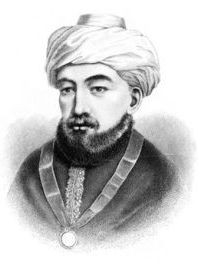
Moisés Maimônides Frases famosas
“Quando os intelectos contemplam a essência de Deus, sua apreensão torna-se incapacidade.”
Citado em o Livro da Filosofia (pg. 85) - Editora Globo - ISBN 978-85-250-4986-5
Moisés Maimônides: Frases em inglês
“…one should accept the truth from whatever source it proceeds.”
Foreword to The Eight Chapters Of Maimonides On Ethics, translated by Joseph I. Gorfinkle, Ph.D. Columbia University Press, New York (1912). Page 35-36. https://archive.org/details/eightchaptersofm00maim
Variante: "Accept the truth from whatever source it comes." Introduction to the Shemonah Peraqim, as quoted in Truth and Compassion: Essays on Judaism and Religion in Memory of Rabbi Dr. Solomon Frank (1983) Edited by Howard Joseph, Jack Nathan Lightstone, and Michael D. Oppenheim, p. 168
Variante: You must accept the truth from whatever source it comes.
Maimónides livro The Guide for the Perplexed
Fonte: The Guide for the Perplexed
“Your purpose… should always be to know… the whole that was intended to be known.”
Maimónides livro The Guide for the Perplexed
Fonte: The Guide for the Perplexed
Maimónides livro The Guide for the Perplexed
Fonte: Guide for the Perplexed (c. 1190), Part III, Ch.25
Maimónides livro The Guide for the Perplexed
Fonte: Guide for the Perplexed (c. 1190), Part III, Ch.10
Maimónides livro The Guide for the Perplexed
Fonte: Guide for the Perplexed (c. 1190), Part III, Ch.8
“The true work of God is all good, since it is existence.”
Maimónides livro The Guide for the Perplexed
Fonte: Guide for the Perplexed (c. 1190), Part III, Ch.10
Maimónides livro The Guide for the Perplexed
Fonte: Guide for the Perplexed (c. 1190), Part III, Ch.17
“No matter how small his portion, let him rejoice in it.”
Fonte: Hilkhot De'ot (Laws Concerning Character Traits), Chapter 2, Section 7, p. 33
Maimónides livro The Guide for the Perplexed
Guide for the Perplexed (c. 1190), Introduction
Maimónides livro The Guide for the Perplexed
Fonte: Guide for the Perplexed (c. 1190), Part III, Ch.25
Maimónides livro Mishneh Torah
“Idolatry,” H. Russell, trans. (1983), p. 72
Mishneh Torah (c. 1180)
Maimónides livro The Guide for the Perplexed
Fonte: Guide for the Perplexed (c. 1190), Part III, Ch.17
Maimónides livro The Guide for the Perplexed
Fonte: Guide for the Perplexed (c. 1190), Part III, Ch.20
Maimónides livro Mishneh Torah
Book 3 (Sefer Zemanim "Times"), Treatise 8 (Kiddush HaChodesh "Sanctification of the New Moon"), closing words
Mishneh Torah (c. 1180)
Maimónides livro The Guide for the Perplexed
Guide for the Perplexed (c. 1190), Introduction
Maimónides livro The Guide for the Perplexed
Fonte: Guide for the Perplexed (c. 1190), Part III, Ch.8
“A scholar … should turn his ears from the talk of the illiterate and not take it to heart.”
Maimónides livro Mishneh Torah
Treatise 3: “The Study of the Torah,” H. Russell, trans. (1983), p. 69
Mishneh Torah (c. 1180)
Maimónides livro The Guide for the Perplexed
Fonte: Guide for the Perplexed (c. 1190), Part III, Ch.31
Maimónides livro The Guide for the Perplexed
Fonte: Guide for the Perplexed (c. 1190), Part III, Ch.30
Maimónides livro The Guide for the Perplexed
Fonte: Guide for the Perplexed (c. 1190), Part III, Ch.24
Maimónides livro The Guide for the Perplexed
Fonte: Guide for the Perplexed (c. 1190), Part III, Ch.12
Sefer Hamitzvot [Book of the Commandments], commentary on Negative Commandment 290, as translated by Charles B. Chavel (1967); also in Defending the Human Spirit : Jewish Law's Vision for a Moral Society (2006) by Warren Goldstein, p. 269
Maimónides livro The Guide for the Perplexed
Fonte: Guide for the Perplexed (c. 1190), Part III, Ch.7
“For how long is it a duty to study the Law? To the day of death.”
Maimónides livro Mishneh Torah
Treatise 3: “The Study of the Torah,” Chapter 1, Section 9, H. Russell, trans. (1983), p. 52
Mishneh Torah (c. 1180)
“For that which is without a beginning, a final cause need not be sought.”
Maimónides livro The Guide for the Perplexed
Fonte: Guide for the Perplexed (c. 1190), Part III, Ch.13


