“A única forma de chegar ao impossível, é acreditar que é possível.”
Lewis Carroll livro Alice no País das Maravilhas
Alice no País das Maravilhas
Charles Lutwidge Dodgson, mais conhecido pelo seu pseudônimo Lewis Carroll , foi um romancista, contista, fabulista, poeta, desenhista, fotógrafo, matemático e reverendo anglicano britânico. Lecionou matemática no Christ College, em Oxford. É autor do clássico livro Alice no País das Maravilhas, além de outros poemas escritos em estilo nonsense ao longo de sua carreira literária, que são considerados políticos, em função das fusões e da disposição espacial das palavras, como precursores da poesia de vanguarda. Wikipedia
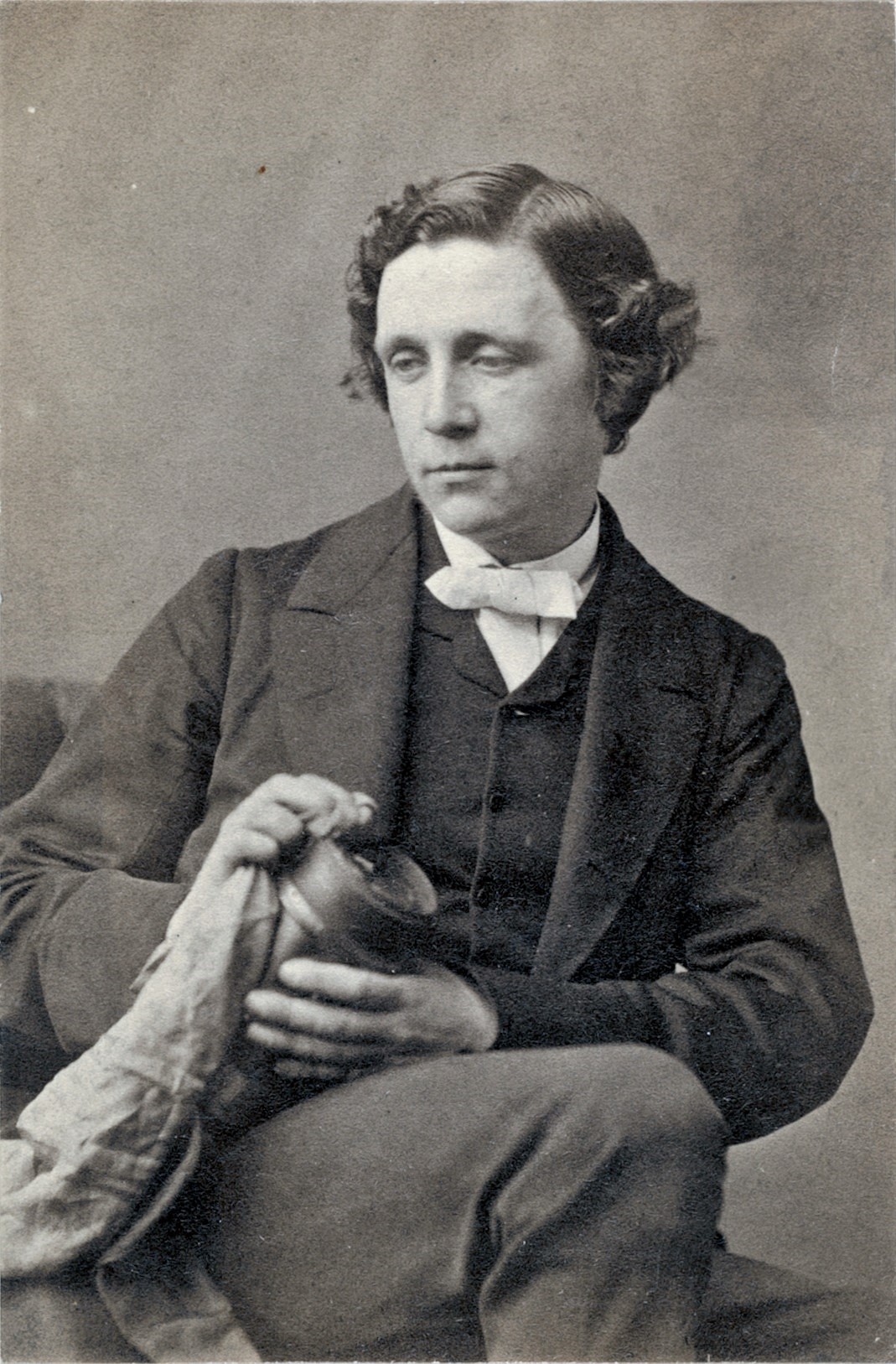
“A única forma de chegar ao impossível, é acreditar que é possível.”
Lewis Carroll livro Alice no País das Maravilhas
Alice no País das Maravilhas
“Nada se é conquistado com lágrimas.”
Lewis Carroll livro Alice no País das Maravilhas
Alice no País das Maravilhas
“Alice: Quanto tempo dura o eterno?
Coelho: Às vezes apenas um segundo.”
Lewis Carroll livro Alice no País das Maravilhas
Alice no País das Maravilhas
“Tudo tem uma moral: é só encontrá-la.”
Everything's got a moral, if only you can find it.
Logical nonsense: the works of Lewis Carrol [pseud.] now, for the first time, complete - página 123, Lewis Carroll, Philip Conklin Blackburn, Lionel White - G. P. Putnam's Sons, 1934 - 568 páginas
'A questão é,' disse Alice, 'se você pode fazer as palavras significarem tantas coisas diferentes.'
'A questão é,' disse Humpty Dumpty, 'quem é o chefe? - isto é tudo.'"
Alice Through the Looking Glass
Alice's Adventures in Wonderland & Through the Looking-Glass
“No, no! The adventures first, explanations take such a dreadful time.”
Fonte: Alice's Adventures in Wonderland & Through the Looking-Glass
“Imagination is the only weapon in the war against reality.”
Lewis Carroll livro Alice no País das Maravilhas
Fonte: Alice in Wonderland
Fonte: Alice's Adventures In Wonderland And Through The Looking Glass
“I'm afraid I can't explain myself, sir. Because I am not myself, you see?”
Lewis Carroll livro Alice no País das Maravilhas
Variante: I can't explain myself, I'm afraid, sir,' said Alice, 'Because I'm not myself you see.
Fonte: Alice in Wonderland
Lewis Carroll livro Through the Looking-Glass
Fonte: Through the Looking Glass
Lewis Carroll livro Alice no País das Maravilhas
Fonte: Alice in Wonderland
Fonte: Alice's Adventures in Wonderland & Through the Looking-Glass
“If you don't know where you are going any road can take you there”
Lewis Carroll livro Alice no País das Maravilhas
Variante: If you do not know where you want to go, it doesn't matter which path you take.
Fonte: Alice in Wonderland
Fonte: Alice's Adventures in Wonderland & Through the Looking-Glass
Lewis Carroll livro Sylvie and Bruno
Preface
Sylvie and Bruno (1889)
Contexto: I do not know if 'Alice in Wonderland' was an original story — I was, at least, no conscious imitator in writing it — but I do know that, since it came out, something like a dozen story-books have appeared, on identically the same pattern. The path I timidly explored believing myself to be 'the first that ever burst into that silent sea' — is now a beaten high-road: all the way-side flowers have long ago been trampled into the dust: and it would be courting disaster for me to attempt that style again.
Lewis Carroll livro Sylvie and Bruno
Preface
Sylvie and Bruno (1889)
Contexto: I believe this thought, of the possibility of death — if calmly realised, and steadily faced would be one of the best possible tests as to our going to any scene of amusement being right or wrong. If the thought of sudden death acquires, for you, a special horror when imagined as happening in a theatre, then be very sure the theatre is harmful for you, however harmless it may be for others; and that you are incurring a deadly peril in going. Be sure the safest rule is that we should not dare to live in any scene in which we dare not die.
But, once realise what the true object is in life — that it is not pleasure, not knowledge, not even fame itself, 'that last infirmity of noble minds' — but that it is the development of character, the rising to a higher, nobler, purer standard, the building-up of the perfect Man — and then, so long as we feel that this is going on, and will (we trust) go on for evermore, death has for us no terror; it is not a shadow, but a light; not an end, but a beginning!
Lewis Carroll livro Sylvie and Bruno
Fonte: Sylvie and Bruno (1889), Chapter 25 : Looking Eastward
“Be sure the safest rule is that we should not dare to live in any scene in which we dare not die.”
Lewis Carroll livro Sylvie and Bruno
Preface
Sylvie and Bruno (1889)
Contexto: I believe this thought, of the possibility of death — if calmly realised, and steadily faced would be one of the best possible tests as to our going to any scene of amusement being right or wrong. If the thought of sudden death acquires, for you, a special horror when imagined as happening in a theatre, then be very sure the theatre is harmful for you, however harmless it may be for others; and that you are incurring a deadly peril in going. Be sure the safest rule is that we should not dare to live in any scene in which we dare not die.
But, once realise what the true object is in life — that it is not pleasure, not knowledge, not even fame itself, 'that last infirmity of noble minds' — but that it is the development of character, the rising to a higher, nobler, purer standard, the building-up of the perfect Man — and then, so long as we feel that this is going on, and will (we trust) go on for evermore, death has for us no terror; it is not a shadow, but a light; not an end, but a beginning!
Lewis Carroll livro Alice no País das Maravilhas
Fonte: Alice's Adventures in Wonderland
Lewis Carroll livro Alice no País das Maravilhas
Fonte: Alice in Wonderland
Lewis Carroll livro Alice no País das Maravilhas
Fonte: Alice in Wonderland
“And what is the use of a book, without pictures or conversation?”
Lewis Carroll livro Alice no País das Maravilhas
Fonte: Alice's Adventures in Wonderland
“It is better to be feared than loved.”
Lewis Carroll livro Alice no País das Maravilhas
Fonte: Alice in Wonderland
“Tut, tut, child!" said the Duchess. "Everything's got a moral, if only you can find it.”
Variante: Everything's got a moral, if only you can find it.
Fonte: Alice's Adventures in Wonderland & Through the Looking-Glass
“Well, I never heard it before, but it sounds uncommon nonsense.”
Lewis Carroll livro Alice no País das Maravilhas
Fonte: Alice in Wonderland
Lewis Carroll livro Through the Looking-Glass
Fonte: Through the Looking Glass
Lewis Carroll Three Sunsets and Other Poems
Solitude (1853), conclusion
Three Sunsets and Other Poems (1898)
Contexto: p>Ye golden hours of Life's young spring,
Of innocence, of love and truth!
Bright, beyond all imagining,
Thou fairy-dream of youth!I'd give all wealth that years have piled,
The slow result of Life's decay,
To be once more a little child
For one bright summer-day.</p
“Why is a raven like a writing desk?”
Lewis Carroll livro Alice no País das Maravilhas
Fonte: Alice in Wonderland
“I give myself very good advice, but I very seldom follow it.”
Variante: She generally gave herself very good advice, (though she very seldom followed it).
Fonte: Alice's Adventures in Wonderland & Through the Looking-Glass
Fonte: Alice's Adventures in Wonderland and Through the Looking Glass
Lewis Carroll livro Alice no País das Maravilhas
Fonte: Alice's Adventures in Wonderland