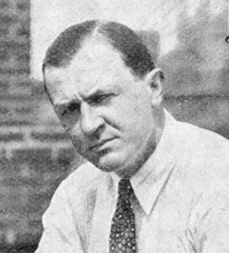
Quoted by William Bolcom, in The End of the Mannerist Century / quoted in Art of the 20th Century, Part 1, Karl Ruhrberg, Klaus Honnef, Manfred Schneckenburger, Christiane Fricke; publisher: Taschen 2000, p. 190
Georg Grosz: 9 citações0 Curtidas
Georg Grosz: Frases em inglês
In newspaper 'Frankfurter Zeitung', 4 Dec. 1930, second morning edition [copy, in the 'Archive of the National-Galerie', East Berlin])
the statement in this German newspaper reports of the case, brought against Grosz for 'blasphemy', over his portfolio of prints: 'Hintergrund' (Background)
Letter, September 1915, to Robert Bell; in Grosz, Briefe, p. 30 ff; as cited in 'Portfolios', Alexander Dückers; in German Expressionist Prints and Drawings - Essays Vol 1.; published by Museum Associates, Los Angeles County Museum of Art, California & Prestel-Verlag, Germany, 1986, p. 112 - note 61
Grosz, Nov. 1920 in: 'Zu meinen neuen Bildern', Das Kunstblatt 5., no. 1 (1921): as cited in 'Portfolios', Alexander Dückers; in German Expressionist Prints and Drawings - Essays Vol 1.; published by Museum Associates, Los Angeles County Museum of Art, California & Prestel-Verlag, Germany, 1986, pp. 91-92
“Árt is dead. Long live Tatlin's new machine art.”
Grosz and Heartfield, 1920: text on their billboard at the Dada fair in Berlin
In the 1930's Grosz encouraged as art-teacher his students at the Art Students League in New York to study children's drawings
Fonte: a student's unpublished papers 'Notes on Drawing and Water Golor, 1935-36', George Grosz estate, Princeton, N.J.; as quoted in: George Grosz: Leben und Werk, ed. Uwe M. Schneede; Verlag Gerd Hatje, Stuttgart 1975, p. 38
as cited by Otto Friedrich in Before the Deluge, Fromm International Publishing Corporation, 1987, p. 37 - ISBN 0-88064-054-5
Letter to Otto Schmalhausen, 4 April, 1917 (Briefe, p. 49); as quoted in 'Portfolios', Alexander Dückers; in German Expressionist Prints and Drawings - Essays Vol 1.; published by Museum Associates, Los Angeles County Museum of Art, California & Prestel-Verlag, Germany, 1986, p. 89 - note 62
George Grosz was early January 1917 recalled into the German army, only to be transferred shortly afterward to Gorden mental hospital near Brandenburg. From there he wrote this letter. At the end of April 1917 he was sent home, and on 20 May he was discharged on grounds of 'permanent unfitness for duty'
In his autobiography, 1946, p. 270; as quoted on Wikipedia: George Grosz


