S. I. Hayakawa livro Language in Thought and Action
Fonte: Language in Thought and Action (1949), Language as Symbolism, p. 27
Samuel Ichiye Hayakawa foi um acadêmico e político estadunidense nascido no Canadá.
Lecionou língua inglesa, foi presidente da Universidade do Estado de São Francisco e senador dos Estados Unidos pelo estado da Califórnia, de 1977 a 1983.
Foi educado nas escolas públicas de Calgary e Winnipeg, no Canadá. Recebeu a sua licenciatura na Universidade de Manitoba, em 1927; e graduação em Inglês pela Universidade McGill, em 1928, e pela Universidade de Wisconsin-Madison, em 1935.
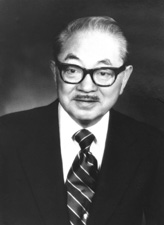
S. I. Hayakawa livro Language in Thought and Action
Fonte: Language in Thought and Action (1949), Language as Symbolism, p. 27
S. I. Hayakawa livro Language in Thought and Action
Footnote, p. 26
Language in Thought and Action (1949), The Symbolic Process
S. I. Hayakawa livro Language in Thought and Action
Fonte: Language in Thought and Action (1949), The Symbolic Process, pp. 24-25
S. I. Hayakawa livro Language in Thought and Action
Fonte: Language in Thought and Action (1949), The Symbolic Process, p. 24
S. I. Hayakawa livro Language in Thought and Action
Fonte: Language in Thought and Action (1949), Bearing the Unbearable, p. 144-145
S. I. Hayakawa livro Language in Thought and Action
Fonte: Language in Thought and Action (1949), Cooperation, p. 11
S. I. Hayakawa livro Language in Thought and Action
Fonte: Language in Thought and Action (1949), The Pooling of Knowledge, p. 14
S. I. Hayakawa livro Language in Thought and Action
Fonte: Language in Thought and Action (1949), What Animals Shall We Imitate?, p. 8
S. I. Hayakawa livro Language in Thought and Action
</SPAN>
Fonte: Language in Thought and Action (1949), Language as Symbolism, p. 27
S. I. Hayakawa livro Language in Thought and Action
See also: The Meaning of Meaning (1923)
See also: Science and Sanity (1933)
Fonte: Language in Thought and Action (1949), The Word Is Not the Thing, pp. 29-30
S. I. Hayakawa livro Language in Thought and Action
Fonte: Language in Thought and Action (1949), The Symbolic Process, p. 26
S. I. Hayakawa livro Language in Thought and Action
</SPAN>
Fonte: Language in Thought and Action (1949), The Niagara of Words, p. 18
S. I. Hayakawa livro Language in Thought and Action
Fonte: Language in Thought and Action (1949), Maps and Territories, p. 31
S. I. Hayakawa livro Language in Thought and Action
</SPAN>
Fonte: Language in Thought and Action (1949), Language as Symbolism, pp. 26-27
S. I. Hayakawa livro Language in Thought and Action
Language, that is to say, makes progress possible. </SPAN>
Fonte: Language in Thought and Action (1949), The Pooling of Knowledge, p. 12
S. I. Hayakawa livro Language in Thought and Action
Fonte: Language in Thought and Action (1949), The Pitfalls of Drama, pp. 27-28
S. I. Hayakawa livro Language in Thought and Action
Fonte: Language in Thought and Action (1949), The Niagara of Words, p. 16
S. I. Hayakawa livro Language in Thought and Action
Fonte: Language in Thought and Action (1949), The Niagara of Words, p. 17
S. I. Hayakawa livro Language in Thought and Action
Fonte: Language in Thought and Action (1949), The Niagara of Words, p. 15
S. I. Hayakawa livro Language in Thought and Action
Fonte: Language in Thought and Action (1949), The Symbolic Process, p. 26
S. I. Hayakawa livro Language in Thought and Action
Fonte: Language in Thought and Action (1949), The Pooling of Knowledge, p. 13
S. I. Hayakawa livro Language in Thought and Action
Fonte: Language in Thought and Action (1949), Maps and Territories, p. 32
S. I. Hayakawa livro Language in Thought and Action
Fonte: Language in Thought and Action (1949), The Pitfalls of Drama, p. 28
S. I. Hayakawa livro Language in Thought and Action
Fonte: Language in Thought and Action (1949), Giving Things Names, p. 209-210
S. I. Hayakawa livro Language in Thought and Action
Fonte: Language in Thought and Action (1949), The Pooling of Knowledge, p. 14
S. I. Hayakawa livro Language in Thought and Action
</SPAN>
Fonte: Language in Thought and Action (1949), The Pooling of Knowledge, pp. 14-15
S. I. Hayakawa livro Language in Thought and Action
To achieve this control, one may employ what Kenneth Burke has called "symbolic strategies" -- that is, ways of reclassifying our experiences so that they are "encompassed" and easier to bear. Whether by processes of "pouring out one's heart" or by "symbolic strategies" or by other means, we may employ symbolizations as mechanisms of relief when the pressures of a situation become intolerable. </SPAN>
Fonte: Language in Thought and Action (1949), Bearing the Unbearable, p. 144-145


