“Aquele que não perdoa destrói a ponte sobre a qual ele mesmo deve passar.”
Variante: Aquele que não pode perdoar destrói a ponte sobre a qual ele mesmo deve passar.
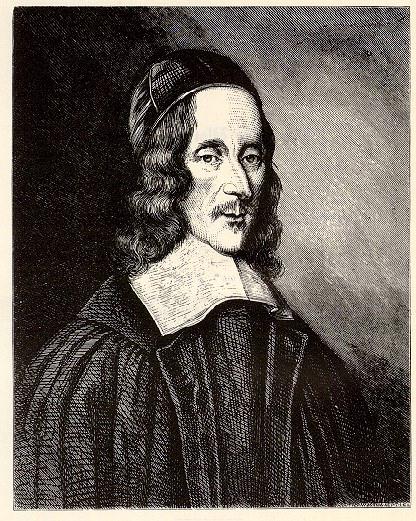
George Herbert foi um poeta, orador e sacerdote anglo-galês.
Membro de uma família aristocrática, estudou na Westminster School e no Trinity College, em Cambridge. Em 1618 foi considerado Fellow da Universidade de Cambridge, instituição onde foi orador entre 1620 e 1628.
Toda a sua obra foi publicada a título póstumo, da qual se destacam: The Temple: Sacred Poems and Private Ejaculations , Herbert compilou o livro Outlandish Proverbs , A Priest to the Temple . Wikipedia
“Aquele que não perdoa destrói a ponte sobre a qual ele mesmo deve passar.”
Variante: Aquele que não pode perdoar destrói a ponte sobre a qual ele mesmo deve passar.
“Uma espada obriga a outra a ficar na bainha.”
One sword keeps another in the sheath <br class="br">"Jacula Prudentum" in: "The Poetical Works of George Herbert: With Life, Critical Dissertation and Explanatory Notes" - Página 314 http://books.google.com.br/books?id=b6IpXPlBKFkC&pg=PA314, de George Herbert, George Gilfillan - Publicado por Appleton,1854 - 328 páginas
“O homem roubou o fruto, mas eu preciso de trepar a árvore.”
Man stole the fruit, but I must climb the tree <br class="br">The Temple: Sacred Poems and Private Ejaculations - Página 25 http://books.google.com/books?id=vv-PaLfn8wIC&pg=PA25, de George Herbert, Christopher Harvey - Publicado por Pickering, 1838 - 361 páginas
“O melhor espelho é um velho amigo.”
The best mirror is an old friend <br class="br">"Jacula Prudentum" in: "The Poetical Works of George Herbert: With Life, Critical Dissertation and Explanatory Notes" - Página 301 http://books.google.com.br/books?id=0R-Gmww20kAC&pg=PA301, de George Herbert, George Gilfillan - 1854 - 328 páginas
“Quem caminha descalço não deve semear espinhos.”
He that goes barefoot must not plant thorns. <br class="br">The remains of that sweet singer of The temple - Página 142 http://books.google.com.br/books?id=u5m1t-RofKEC&pg=PA142, George Herbert, Izaak Walton, Barnabas Oley - Pickering, 1841 - 244 páginas
“67. Never had ill workman good tooles.”
Jacula Prudentum (1651)
“294. A man's discontent is his worst evill.”
Jacula Prudentum (1651)
“557. The offender never pardons.”
Jacula Prudentum (1651)
“508. He that tells a secret is another's servant.”
Jacula Prudentum (1651)
“763. Better speake truth rudely then lye covertly.”
Jacula Prudentum (1651)
“376. Little pitchers have wide eares.”
Jacula Prudentum (1651)
“497. Little wealth, little care.”
Jacula Prudentum (1651)
“155. Good words are worth much, and cost little.”
Jacula Prudentum (1651)
“215. Into a mouth shut flies flie not.”
Variant of the Sumerian proverb: Flies enter an open mouth. http://etcsl.orinst.ox.ac.uk/proverbs/t.6.1.03.html <br class="br">Jacula Prudentum (1651)
“138. Well may hee smell fire whose gowne burnes.”
Jacula Prudentum (1651)
“248. Marry a widdow before she leave mourning.”
Jacula Prudentum (1651)
“621. Speake fitly, or be silent wisely.”
Jacula Prudentum (1651)
“[ A scab'd horse cannot abide the comb. ]”
Jacula Prudentum (1651)
“Be useful where thou livest.”
The Temple (1633), The Church Porch
“743. God's mill grinds slow but sure.”
Jacula Prudentum (1651)
Fonte: The Temple (1633), The Elixir, Lines 17-20
“720. Be what thou wouldst seem to be.”
Jacula Prudentum (1651)
“339. Hee that lies with the dogs riseth with fleas.”
Jacula Prudentum (1651)
“676. A little wind kindles, much puts out the fire.”
Jacula Prudentum (1651)
“719. One sword keepes another in the sheath.”
Jacula Prudentum (1651)
“193. If the old dog barke he gives counsell.”
Jacula Prudentum (1651)
“1. Man proposeth, God disposeth.”
Jacula Prudentum (1651)
“440. Fly the pleasure that bites to-morrow.”
Jacula Prudentum (1651)