“Felicidade é estar absorvido por algo completo e maravilhoso.”
Willa Cather livro My Ántonia
At any rate, that is happiness; to be dissolved into something complete and great.
My Antonia (1918), Book I, Ch. Livro I, Ch. 2
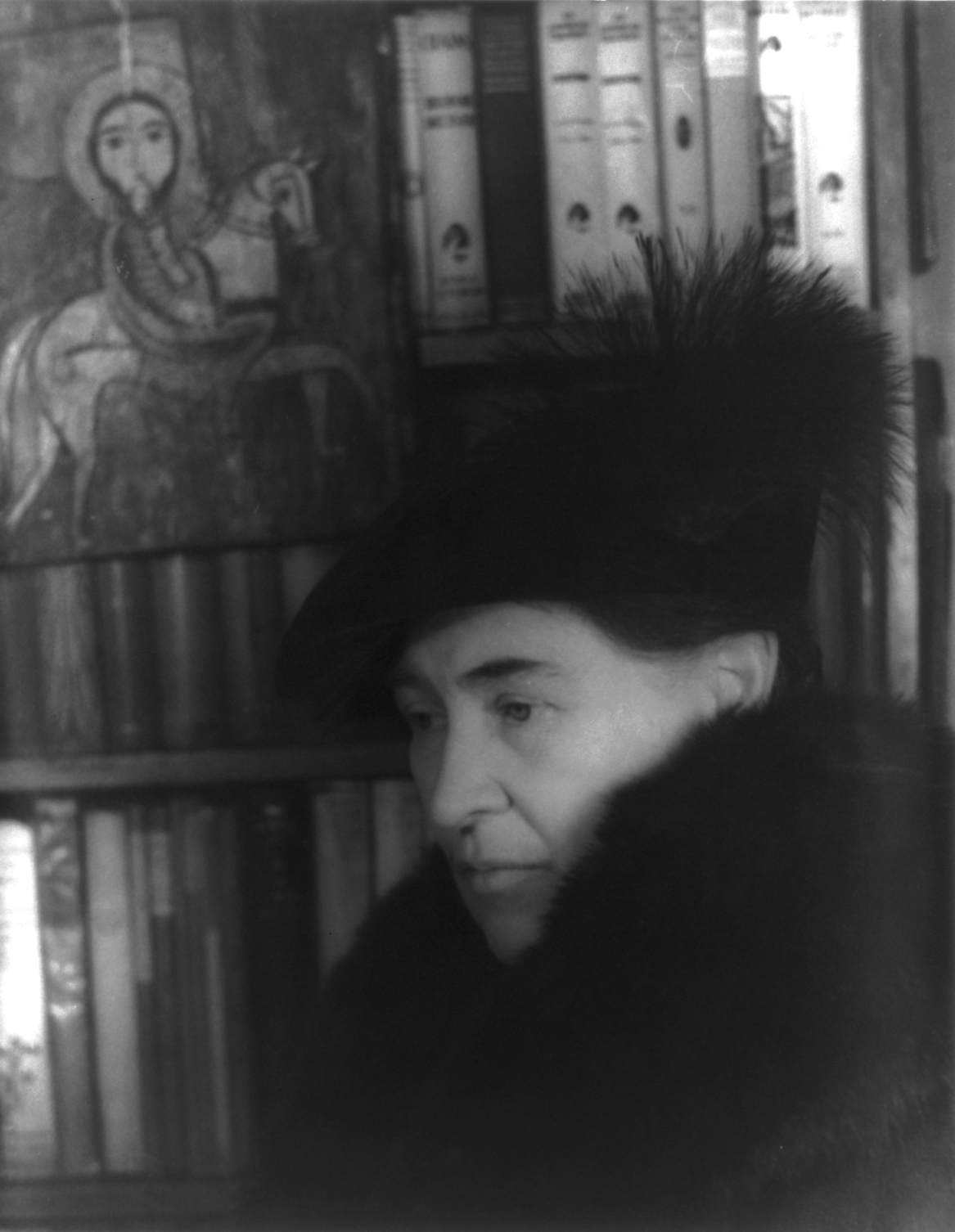
Willa Cather ou Wilella Silbert Cather foi uma escritora americana; seu sobrenome paterno indicando origens no País de Gales. Ela alcançou reconhecimento por seus romances da vida de fronteira nas Grandes Planícies, em obras como O Pioneers!, My Antonia e The Song of the Lark. Em 1923, ela foi premiada com o Prémio Pulitzer de Ficção por One of Ours , um romance ambientado durante a Primeira Guerra Mundial. Cather cresceu em Nebraska e se formou na Universidade de Nebraska, viveu e trabalhou em Pittsburgh por dez anos; em seguida, com a idade de 33, mudou-se para Nova York, onde viveu pelo resto de sua vida.
Em uma época na qual o sexismo e a homofobia eram as normas sociais raramente questionadas, Willa Cather se vestiu de homem na universidade, de cabelo cortado curto, contrariando os costumes, se apresentando pelo nome mesculino William, mais tarde vindo a dividir seu quarto com outra jovem por cinco anos, e quem ela sem dúvidas amou, jamais assumiu abertamente ser lésbica. Ao contrário, propositalmente destruiu missivas e material que experts acreditam seria no mínimo bastante revelador. O fato persiste de que estudiosos/as que se debruçam sobre a vida desta famosa escritora não conseguem recontar a sua história sem mencionar o nome de seu amor proibido.
“Felicidade é estar absorvido por algo completo e maravilhoso.”
Willa Cather livro My Ántonia
At any rate, that is happiness; to be dissolved into something complete and great.
My Antonia (1918), Book I, Ch. Livro I, Ch. 2
“Religião e arte procedem da mesma raiz e são parentes próximos. Economia e arte não se conhecem.”
Willa Cather livro The Professor's House
Art and religion (they are the same thing, in the end, of course) have given man the only happiness he has ever had.
The Professor's House (1925), Livro I, Ch. 5
Willa Cather livro The Song of the Lark
Part VI, Ch. 11
The Song of the Lark (1915)
Willa Cather livro My Ántonia
Book II, Ch. 7
My Antonia (1918)
Willa Cather livro Death Comes for the Archbishop
Book VII, Ch. 4
Death Comes for the Archbishop (1927)
Willa Cather livro O Pioneers!
Part I, Ch. 5
O Pioneers! (1913)
"Four Letters: Escapism" (1936)
Willa Cather on Writing (1949)
“That irregular and intimate quality of things made entirely by the human hand.”
Willa Cather livro Death Comes for the Archbishop
Book I, Ch. 3
Death Comes for the Archbishop (1927)
Willa Cather livro O Pioneers!
Part IV, Ch. 5
O Pioneers! (1913)
"The Novel Démeublé"
Not Under Forty (1936)
“Every artist makes himself born. It is very much harder than the other time, and longer.”
Willa Cather livro The Song of the Lark
Part II, Ch. 3
The Song of the Lark (1915)


