“A única forma de chegar ao impossível, é acreditar que é possível.”
Lewis Carroll livro Alice no País das Maravilhas
Alice no País das Maravilhas
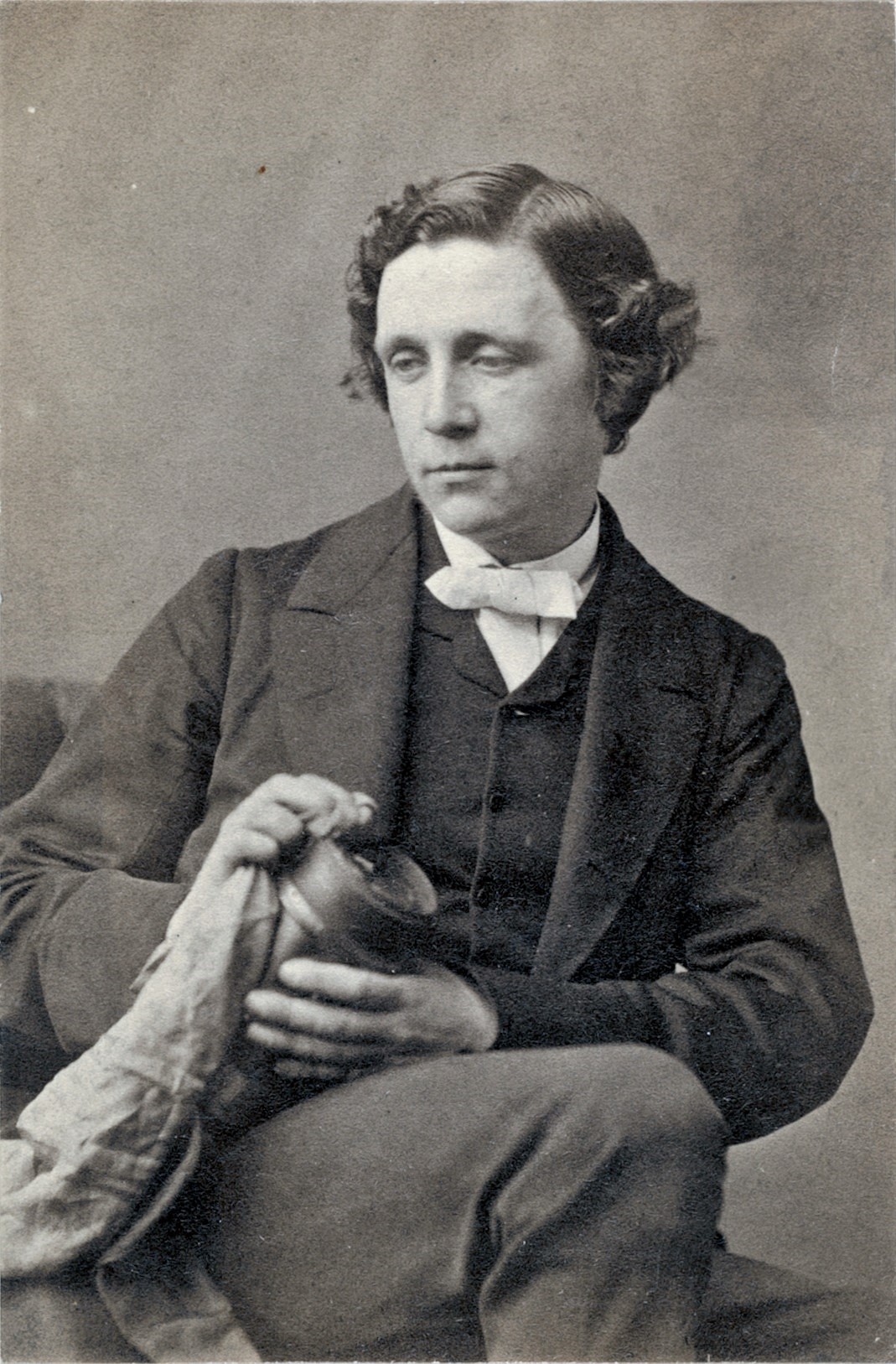
Charles Lutwidge Dodgson, mais conhecido pelo seu pseudônimo Lewis Carroll , foi um romancista, contista, fabulista, poeta, desenhista, fotógrafo, matemático e reverendo anglicano britânico. Lecionou matemática no Christ College, em Oxford. É autor do clássico livro Alice no País das Maravilhas, além de outros poemas escritos em estilo nonsense ao longo de sua carreira literária, que são considerados políticos, em função das fusões e da disposição espacial das palavras, como precursores da poesia de vanguarda. Wikipedia
“A única forma de chegar ao impossível, é acreditar que é possível.”
Lewis Carroll livro Alice no País das Maravilhas
Alice no País das Maravilhas
“Nada se é conquistado com lágrimas.”
Lewis Carroll livro Alice no País das Maravilhas
Alice no País das Maravilhas
“Alice: Quanto tempo dura o eterno?
Coelho: Às vezes apenas um segundo.”
Lewis Carroll livro Alice no País das Maravilhas
Alice no País das Maravilhas
“Tudo tem uma moral: é só encontrá-la.”
Everything's got a moral, if only you can find it.
Logical nonsense: the works of Lewis Carrol [pseud.] now, for the first time, complete - página 123, Lewis Carroll, Philip Conklin Blackburn, Lionel White - G. P. Putnam's Sons, 1934 - 568 páginas
'A questão é,' disse Alice, 'se você pode fazer as palavras significarem tantas coisas diferentes.'
'A questão é,' disse Humpty Dumpty, 'quem é o chefe? - isto é tudo.'"
Alice Through the Looking Glass
Alice's Adventures in Wonderland & Through the Looking-Glass
Melodies No. 3
Useful and Instructive Poetry (1845)
"To Janet Merriman", quoted in Letters of Lewis Carroll to his Child-Friends (1933) p. 81
Eight or Nine Wise Words About Letter-Writing (1890)
“But surely you trust God! Do you think He would let you come to harm? To be afraid is to distrust.”
To a girl who was frightened of traveling by train
Quoted in Beatrice Hatch, "Lewis Carroll", Strand Magazine (April 1898), p. 421
Lewis Carroll livro Sylvie and Bruno
Introduction
Sylvie and Bruno Concluded (1893)
Tèma con Variazióne, st. 1
Rhyme? and Reason? (1883)
Lewis Carroll livro Sylvie and Bruno
Fonte: Sylvie and Bruno Concluded (1893), Chapter 19: A Fairy Duet
“Yet what are all such gaieties to me
Whose thoughts are full of indices and surds?
x2+7x+53
=11/3.”
Four Riddles, no. I
Rhyme? and Reason? (1883)
Hiawatha's Photographing st. 1 & 2
Rhyme? and Reason? (1883)
Explaining the Knight-Mayor's name
Canto 5
Phantasmagoria (1869)
Lewis Carroll Three Sunsets and Other Poems
Three Sunsets (1861)
Three Sunsets and Other Poems (1898)
Eight or Nine Wise Words About Letter-Writing (1890)
Four Riddles, no. III
Rhyme? and Reason? (1883)
Lewis Carroll livro Sylvie and Bruno
Fonte: Sylvie and Bruno Concluded (1893), Chapter 1: Bruno's Lessons
Lewis Carroll livro What the Tortoise Said to Achilles
"I see," said Achilles; and there was a touch of sadness in his tone.
"What the Tortoise Said to Achilles", Mind, n.s., 4 (1895), pp. 278–80
My Fairy
Useful and Instructive Poetry (1845)
The Lang Coortin, last two stanzas
Rhyme? and Reason? (1883)
Lewis Carroll Three Sunsets and Other Poems
A Lesson in Latin (1888), st. 3
Three Sunsets and Other Poems (1898)
Lewis Carroll livro Sylvie and Bruno
Fonte: Sylvie and Bruno (1889), Chapter 4 : A Cunning Conspiracy
Lewis Carroll Three Sunsets and Other Poems
The Path of Roses (1856), concluding lines
Three Sunsets and Other Poems (1898)
Lewis Carroll Three Sunsets and Other Poems
Faces in the Fire (1860), st. 13
Three Sunsets and Other Poems (1898)