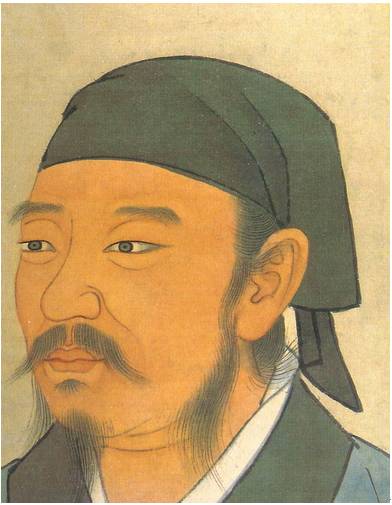
Frases de Xun Zi

Xunzi , born Xun Kuang , was a Chinese philosopher of Confucianism during the late Warring States period. After his predecessors Confucius and Mencius, Xunzi is often ranked as the third great Confucian philosopher of antiquity. By his time, Confucianism had suffered considerable criticism from Daoist and Mohist thinkers, and Xunzi is traditionally regarded as a synthesizer of these traditions with earlier Confucian thought. The result was a thorough and cohesive revision of Confucianism, which was crucial to the philosophy's ability to flourish in the Han dynasty and throughout the later history of East Asia. His works were compiled in the eponymous Xunzi, and survive in excellent condition. Unlike other ancient compilations, his authorship of these texts is generally secure, though it is likely that Western Han Dynasty historian Liu Xiang organized them into their present form centuries after Xunzi's death.Born in the State of Zhao, Xunzi studied at the prestigious Jixia Academy, where he learned about every major philosophical tradition of his time. After his graduation, Xunzi traveled to Chu where he mastered poetry, and then returned to Qi as a highly-regarded teacher at the academy. His students Han Fei and Li Si each had an important political and academic careers, though some of their Legalist sentiments were at odds with his philosophy. Other students such as Fuqiu Bo, Zhang Cang and Mao Heng authored important editions and commentaries on the Confucian classics. Later in his life worked in the court of Lord Chunshen, whose death he died sometime after. The constant warfare of his time informed his work profoundly, as did his interactions with leaders and witnessing the downfall of various states.

Xunzi's writings respond to dozens of other thinkers, whom he often directly names and criticizes. His well-known notion that "Human nature is evil" has led many commentators to place him opposite of Mencius, who believed human nature was intrinsically good. Though like Mencius, Xunzi believed that education and ritual were the key to self-cultivation and thus the method to circumvent one's naturally foul nature. His definition of both concepts was loose, and he encouraged lifelong education and applied ritual to every aspect of life. Other important topics include the promotion of music and the careful application of names. Though he still cited the ancient sages, he differed from other Confucian philosophers by his insistence on emulating recent rulers rather than those of long ago. Repeated oversimplifications and misunderstandings on Xunzi's teachings, particularly his view on human nature, led to gradual dismissal and condemnation of his thought from the Tang dynasty onwards. By the rise of Neo-Confucianism in the 10th-century, Mencius gradually upended Xunzi, particularly by the choice to include the Mencius in the Four Books. Since the 20th-century, a reevaluation of Xunzi's doctrine has taken place in East Asia, leading to recognition of his profound impact and relevance to both his times and present day. Wikipedia  

✵ 313 a.C. – 238 a.C.
Xun Zi photo
Xun Zi: 13   citações 2   Curtidas

Xun Zi: Frases em inglês

“One whose intentions and thoughts are cultivated will disregard wealth and nobility. One whose greatest concern is for the Way and righteousness will take lightly kings and dukes. It is simply that when one examines oneself on the inside, external goods carry little weight. A saying goes, "The gentleman makes things his servants. The petty man is servant to things."”

Readings in Classical Chinese Philosophy (2001), p. 263
A similar phrase to the saying is found in the 3rd millennium BCE Sumerian text Instructions of Shuruppak by Šuruppak: "You should not serve things; things should serve you." http://etcsl.orinst.ox.ac.uk/section5/tr561.htm
"Cultivating oneself"

“The person attempting to travel two roads at once will get nowhere.”

Quoted in: Errick A. Ford (2010) Iron Sharpens Iron: Wisdom of the Ages, p. 48.

“Human nature is evil, and goodness is caused by intentional activity.”

Quoted in: Fayek S. Hourani (2012) Daily Bread for Your Mind and Soul, p. 336.

“If an action … involves little profit but much righteousness, do it.”

Readings in Classical Chinese Philosophy (2001), p. 263
"Cultivating oneself"

Autores parecidos

Confucio photo
Confucio 227
Filósofo chinês
Sun Tzu photo
Sun Tzu 53
antigo general militar, estratega e filósofo chinês da Dina…