Esta tradução está aguardando revisão. Está correcto?
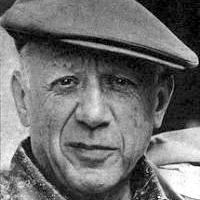
Pablo Picasso: 155 citações147 Curtidas
Pablo Picasso Frases famosas
“Não se pode fazer nada sem a solidão.”
Nada puede hacerse sin soledad
citado em Punta Europa: Volume 2,Edições 18-24 - página 154, Vicente Marrero Suárez - 1957
Atribuídas
Pablo Picasso frases e citações
Pablo Picasso citado em "Quando a Psicoterapia Trava - Página 69, Marina da Costa Manso Vasconcellos, Grupo Editorial Summus, 2007, ISBN 8571830312, 9788571830318 - 216 páginas
“Não há, na arte, nem passado nem futuro. A arte que não estiver no presente jamais será arte.”
Il n'y a, en art, ni passé, ni futur. L'art qui n'est pas dans le présent ne sera jamais.
Pablo Picasso citado in La Revue de France - Volume 11 - Página 117, Marcel Prévost, Joseph Bédier, Raymond Recouly - La Renaissance du livre, 1931
Atribuídas
“Eu não fiz, vocês é que fizeram, eu só pintei.”
resposta de Picasso.
Conta-se que, em 1940, com Paris ocupada pelos nazistas, um oficial alemão, diante de uma fotografia reproduzindo o painel, perguntou à Picasso se havia sido ele quem tinha feito aquilo. O pintor, então, teria respondido com a frase acima.
Atribuídas
“Quando dizem que sou demasiado velho pra fazer alguma coisa procuro fazê-la em seguida.”
Cuando me dicen que soy demasiado viejo para hacer una cosa, procuro hacerla enseguida.
citado em Psiquiatría geriátrica - Página xxi, Luis Agüera Ortiz, Jorge Cervilla Ballesteros, Manuel Martín Carrasco - Publicado por Elsevier España, 2006, ISBN 8445815792, 9788445815793 - 1048 página
Atribuídas
“A inspiração existe, mas tem que te encontrar trabalhando.”
Cambio 16: Edições 884-887, Informacion y Publicaciones, S. A., 1988
Atribuídas
pergunta de um oficial nazista mostrando uma foto do painel Guernica à Picasso.
Atribuídas
“Cézanne é o pai de todos nós.”
Fonte: Site do UOL, num artigo referente aos 100 da morte de Cézanne http://diversao.uol.com.br/arte/ultnot/2006/01/26/ult32u13181.jhtm, publicado no dia 26 de Janeiro de 2006, às 15h23.
“Copiar outras pessoas é necessário, mas copiar a si mesmo é patético.”
To copy others is necessary but to copy oneself is pathetic
Picasso citado em Nation - Edições 1-33 - Página 64, 1958
Atribuídas
“Se sabemos exactamente o que vamos fazer, para quê fazê-lo?”
Si se sabe exactamente lo que se va a hacer. ¿Para qué hacerlo?
citado em Picasso íntimo: 1971 noventa años, Antonio D. Olano - 1971 - 351 páginas
Atribuídas
Pablo Picasso: Frases em inglês
The original quote attributed to Picasso in 1951 quotes him as saying that 'even if he were imprisoned, he would draw on the dust-covered prison walls and on the floor, with his fingers dripped in his own spit' (see above). This expansion appears to derive from an interview given by actor Dustin Hoffman to the L.A. Times in 2001.
http://articles.latimes.com/2001/mar/04/entertainment/ca-32985
Disputed
1930s, "Conversations avec Picasso," 1934–35
Fonte: Herschel Browning Chip (1968, p. 271), quoted in Chipp (1978, 266); As cited in: Constance Milbrath (1998), Patterns of Artistic Development in Children, p. 257.
Paris 1923
As quoted by Marius de Zayas, in 'The Arts', New York, May 1923
Quotes, 1920's, "Picasso Speaks," 1923
“When Matisse died, he left me his Odalisques 'as a legacy', he proclaimed.”
after the death of Matisse (1954); as quoted in Matisse & Picasso, By Paul Trachtman, Smithsonian Magazine, February 2003, p. 7
1950s
Quote in "Picasso", Hans L. C. Jaffe, Thames and Hudson Ltd
Attributed from posthumous publications
Paris 1923
As quoted by Marius de Zayas, in 'The Arts', New York, May 1923
Quotes, 1920's, "Picasso Speaks," 1923
“For me, art has neither past nor future. All I have ever made was for the present.”
Quote in "Picasso", Hans L. C. Jaffe, Thames and Hudson Ltd
Attributed from posthumous publications
“I do not see why so much importance should be attached to the idea of 'research' in painting.”
Quote in "Picasso", Hans L. C. Jaffe, Thames and Hudson Ltd
Attributed from posthumous publications
“Accidents, try to change them - it's impossible. The accidental reveals man.”
Quote in Vogue, 1 November 1956.
1950s
As quoted by Marius de Zayas, in 'The Arts', New York, May 1923
1920s, The Arts', New York, May 1923
Boisgeloup, winter 1934
As quoted in Futurism, ed. Didier Ottinger; Centre Pompidou / 5 Continents Editions, Milan, 2008, p. 313
Quotes, 1930's
Picasso (1937), quote in: William Rowlandson (2007), Reading Lezama's Paradiso. p. 115.
Reply by Picasso when he was asked to explain the symbolism in the Guernica.
1930s
“Nothing can be accomplished without solitude; I have made a kind of solitude for myself.”
Quote in "Picasso", Hans L. C. Jaffe, Thames and Hudson Ltd
Attributed from posthumous publications
Boisgeloup, winter 1934
Quote of Picasso in Futurism, ed. Didier Ottinger; Centre Pompidou / 5 Continents Editions, Milan, 2008
Quotes, 1930's, "Conversations avec Picasso," 1934–35
Paris 1923
As quoted in Futurism, ed. Didier Ottinger; Centre Pompidou / 5 Continents Editions, Milan, 2008, p. 311
Quotes, 1920's
a remark of Picasso to Françoise Gilot, December 1948
Quote of Picasso, in Futurism, ed. Didier Ottinger; Centre Pompidou / 5 Continents Editions, Milan, 2008, p. 311
Quotes, 1940's
Boisgeloup, 1935
As quoted in Futurism, ed. Didier Ottinger; Centre Pompidou / 5 Continents Editions, Milan, 2008
Quotes, 1930's, "Conversations avec Picasso," 1934–35


