Frases de Miguel de Cervantes

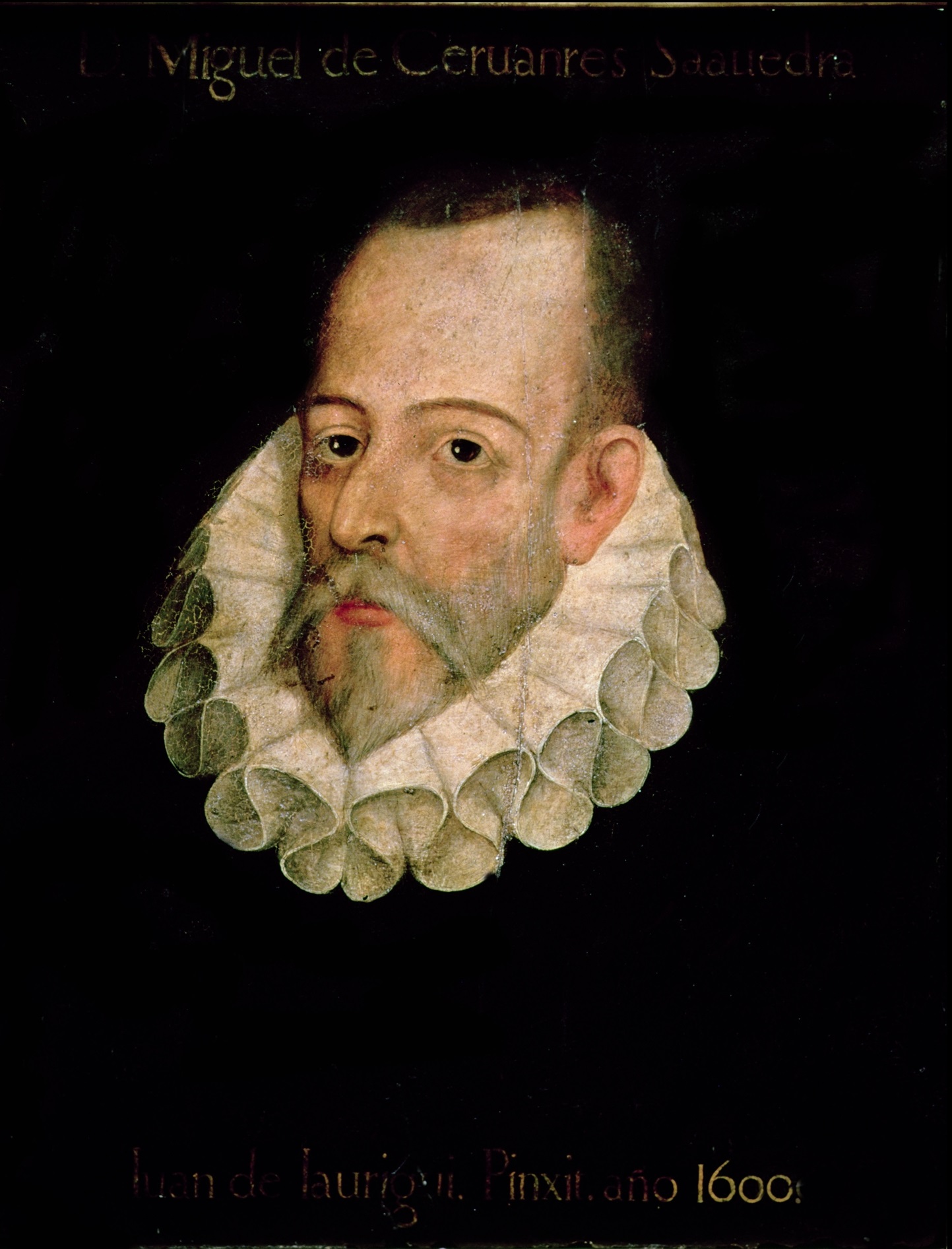
Miguel de Cervantes Saavedra[a] foi um romancista, dramaturgo e poeta castelhano. A sua obra-prima, Dom Quixote, muitas vezes considerada o primeiro romance moderno, é um clássico da literatura ocidental e é regularmente considerada um dos melhores romances já escritos. O seu trabalho é considerado entre os mais importantes em toda a literatura, e sua influência sobre a língua castelhana tem sido tão grande que o castelhano é frequentemente chamado de La lengua de Cervantes . Wikipedia  

✵ 29. Setembro 1547 – 22. Abril 1616  •  Outros nomes Miguel de Cervantes y Saavedra, Saavedra Miguel De Cervantes
Miguel de Cervantes photo

Obras

Dom Quixote
Miguel de Cervantes
Dom Quixote
Miguel de Cervantes
Miguel de Cervantes: 209 citações61 Curtidas

Miguel de Cervantes Frases famosas

“Deixe seu filho caminhar por onde sua estrela o chama.”

Miguel de Cervantes

deje caminar á su hijo por donde su estrella le llama <br class="br">El ingenioso hildalgo don Quijote de la Mancha - Volume 2 - Página 74 https://books.google.com.br/books?id=ZnYZAAAAYAAJ&amp;pg=PA74, Miguel de Cervantes Saavedra, ‎Joaquin Maria Ferrer - Imprenta de Julio Didot Mayor, 1832

“O ser humano se transforma de acordo com o que pensa. Somos frutos de nossas obras.”

Miguel de Cervantes

El ser humano se transforma de acuerdo con lo que piensa. Somos fruto de nuestras obras

“As grandes paixões, aquelas que chegam de repente, sempre trazem consigo as suspeitas.”

Miguel de Cervantes livro Os trabalhos de Persiles e Sigismunda

las grandes venturas que vienen de improviso, siempre traen consigo alguna sospecha. <br class="br">Trabajos de Persiles y Sigismunda - Página 203 http://books.google.com.br/books?id=rSqUvIjeo0QC&amp;pg=PA203, Miguel de Cervantes - 1802

“Essa enfermidade a que os amantes chamam de ciúme, e a que melhor chamariam desespero raivoso, tem por componentes a inveja e o menosprezo. Quando tal enfermidade domina a alma enamorada, não existe ponderação que a sossegue, nem remédio que a possa curar.”

Miguel de Cervantes

esta enfermedad que los amantes llaman celos, que la llamaran mejor desesperacion rabiosa, entran ála parte con ella la envidia y el menosprecio, y cuando una vez se apodera del alma enamorada, no hay consideracion que la sosiegue, ni remedio que la valga <br class="br">Trabajos de Persiles y Sigismunda - página 255 http://books.google.com.br/books?pg=PA255, Miguel de Cervantes Saavedra, Librería de San Martín, Plus Ultra, 1859, 360 páginas

“Não há livro tão mau que não tenha alguma coisa de bom.”

Miguel de Cervantes

No hay libro tan malo [...] que no tenga algo bueno <br class="br">El ingenioso Hidalgo Don Quijote de la Mancha‎ - Página 266 http://books.google.com.br/books?id=lGAMAAAAYAAJ&amp;pg=PA266, de Miguel de Cervantes Saavedra, Adolfo de Castro - Publicado por Imprenta y Liberia de Gaspar y Roig, 1864 - 540 páginas

Citações de idade de Miguel de Cervantes

“A liberalidade é uma das mais agradáveis virtudes de quem ganha fama de a ter.”

Miguel de Cervantes

la liberalidad es una de las más agradables virtudes, de quien se engendra la buena fama <br class="br">Historia de los trabajos de Persiles y Sigismunda - Página 152 https://books.google.com.br/books?id=8QB3-FrWTNoC&amp;pg=PA152, Miguel de Cervantes Saavedra - Juan Nadal, 1768

Miguel de Cervantes frases e citações

“A diligência é a mãe da boa sorte.”

Miguel de Cervantes

D. Quixote de la Mancha - Volume 3 - Página 132, Miguel de Cervantes Saavedra - Livraria Bertrand, 1959

“Quem não sabe governar a si próprio, como saberá governar os outros?”

Miguel de Cervantes livro Dom Quixote

el que no sabe gobernarse á sí ¿cómo sabrá gobernar á otros? <br class="br">Don Quijote de la Mancha‎ - Tomo II Página 257 http://books.google.com.br/books?id=5s4OAAAAYAAJ&amp;pg=RA3-PA257, de Miguel de Cervantes Saavedra - Publicado por Establecimiento tipografico de D.F. de P. Mellado, 1856 - 536 páginas

“É o ciúme, turbador da tranqüila paz amorosa! Ele é punhal que mata a mais firme das esperanças!”

Miguel de Cervantes

O zelos turbadores de la sosegada paz amorosa! zelos, cuchillo de las mas firmes esperanzas ! <br class="br">Los seis libros de Galatea - Volume 1, Página 290 http://books.google.com.br/books?id=iwounOm76NcC&amp;pg=PA290, Miguel de Cervantes Saavedra - por don Antonio de Sancha, se hallará en su librería, 1784 - 304 páginas

“Não há regra sem exceção.”

Miguel de Cervantes

No hay regla sin excepcionNo hay regla sin excepcion
El Ingenioso hidalgo don Quixote de la Mancha,3 - Página 215, Miguel de Cervantes Saavedra - 1782
Atribuídas

“A virtude é mais perseguida pelos maus do que amada pelos bons.”

Miguel de Cervantes

la virtud mas es perseguida de los malos, que amada de los buenos. <br class="br">Obras de Miguel de Cervantes Saavedra: Don Quijote - Página 294 https://books.google.com.br/books?id=8KcGAAAAQAAJ&amp;pg=PA294, Miguel de Cervantes Saavedra, ‎Martín Fernández de Navarrete, ‎María de Zayas y Sotomayor - Baudry, 1841

“Beneficiar vilões é deitar água no mar.”

Miguel de Cervantes

El hacer bien a villanos es echar agua en la mar <br class="br">El ingenioso hidalgo Don Quixote de La Mancha - Volume 2, página 128 https://books.google.com.br/books?id=R_NGlfeHKboC&amp;pg=PA128, Miguel de Cervantes Saavedra - J. de La Cuesta, 1608

“Contra quem cala não há castigo nem respostas.”

Miguel de Cervantes

contra el callar no hay castigo ni respuesta <br class="br">Obras de Miguel de Cervantes Saavedra: Persiles y Sigismunda - página 66 https://books.google.com.br/books?id=q2RJAQAAMAAJ&amp;pg=PA66, Miguel de Cervantes Saavedra, ‎Martín Fernández de Navarrete - Baudry, 1841

“É doce o amor da pátria.”

Miguel de Cervantes

Es dulce el amor de la patria <br class="br">Vida y hechos del ingenioso hidalgo Don Quixote de la Mancha - Volume 2, pagina 482 https://books.google.com.br/books?id=aLIGAAAAQAAJ&amp;pg=PA482, Miguel de Cervantes Saavedra - Juan Bautista Verdussen, 1719

“Elimine a causa que o efeito cessa.”

Miguel de Cervantes

Elimina la causa, y el efecto cesa. <br class="br">como citado in Alto a la Enfermedad! (Stop the Insanity!): C Ma Bien Y Viva Mejor (Stop the Insanity), página 105 https://books.google.com.br/books?id=f52m-h5rSPUC&amp;pg=PA105, Susan Powter - Simon and Schuster, 1995, ISBN 0684813270, 9780684813271, 336 páginas <br class="br">Atribuídas

“História, a êmula do tempo, depósito das ações, testemunho do passado, exemplo do presente, advertência do futuro.”

Miguel de Cervantes

la historia , émula del tiempo , depósito de las acciones, testigo de lo pasado , exemplo y aviso de lo presente , advertencia de lo por venir. <br class="br">El ingenioso hidalgo Don Quixote de La Mancha, Parte primera - Página 7 https://books.google.com.br/books?id=IrIGAAAAQAAJ&amp;pg=PA7, Miguel de Cervantes Saavedra - En la inprenta de la academia por la viuda de Ibarra, hijos y compañía., 1787

“Não desejes e serás o homem mais rico do mundo.”

Miguel de Cervantes

No desees , y seràs el mas rico hombre del mundo. <br class="br">Historia de los trabajos de Persiles y Segismunda - Página 305 https://books.google.com.br/books?id=QLra8hYlmR0C&amp;pg=PA305, Miguel de CERVANTES - Nadal, 1763 - 356 páginas

“Não há memória que o tempo não faça esquecer, como não há dor que a morte não cure.”

Miguel de Cervantes

no hay memoria a quien el tiempo no acabe, ni dolor que muerte no le consuma. <br class="br">El ingenioso hidalgo Don Quixote de la Mancha compuesto por Miguel de Cervantes Saavedra, Volume 1, página 121 https://books.google.com.br/books?id=DJDFYggUTGMC&amp;pg=PA121, 1780 <br class="br">Atribuídas

“Sê breve em teus raciocínios, que a ninguém agrada ser longo.”

Miguel de Cervantes

Sea breve en sus razonamientos, que a nadie agrada si es largo.
Cervantes citado in: El amigo de todos: 4,850 pensamientos clasificados y 700 refranes explicados, Compilado por Victor Quintanilla Young, Vilma Elvira C. de Quintanilla, 1971
Atribuídas

“Sê pai das virtudes e padrasto dos vícios.”

Miguel de Cervantes

Sé padre de las virtudes y padrastro de los vicios. <br class="br">Vida Y Hechos Del Ingenioso Hidalgo Don Quixote de la Mancha, página 120 https://books.google.com.br/books?id=3nMtthImNcIC&amp;pg=PT120, Miguel de Cervantes Saavedra - por J. y R. Tonson, 1738 - 368 páginas <br class="br">Atribuídas

“O soldado melhor parece morto na luta do que livre na fuga.”

Miguel de Cervantes

El soldado más bien parece muerto en la batalla que libre en la fuga <br class="br">El ingenioso hidalgo Don Quijote de la Mancha - Volume 3, Página 467 https://books.google.com.br/books?id=JEQoAQAAIAAJ&amp;pg=PA467, Miguel de Cervantes Saavedra - Post Tenebras Spero Lvcem, 1605 - 983 páginas <br class="br">Atribuídas

Miguel de Cervantes: Frases em inglês

“A bird in the hand is worth two in the bush.”

Miguel de Cervantes

Fonte: Don Quixote de la Mancha (1605–1615), Part I, Book IV, Ch. 4.

“Raise a hue and cry.”

Miguel de Cervantes

Fonte: Don Quixote de la Mancha (1605–1615), Part I, Book III, Ch. 8.

“To withdraw is not to run away, and to stay is no wise action when there is more reason to fear than to hope. 'Tis the part of a wise man to keep himself today for tomorrow, and not venture all his eggs in one basket.”

Miguel de Cervantes

Sancho to Don Quixote, in Ch. 9, Peter Anthony Motteux translation (1701).
Don Quixote de la Mancha (1605–1615), Part I, Book III
Contexto: To withdraw is not to run away, and to stay is no wise action when there is more reason to fear than to hope. 'Tis the part of a wise man to keep himself today for tomorrow, and not venture all his eggs in one basket. And though I am but a clown, or a bumpkin, as you may say, yet I would have you to know I know what is what, and have always taken care of the main chance...

“Honesty is the best policy, I will stick to that. The good shall have my hand and heart, but the bad neither foot nor fellowship. And in my mind, the main point of governing, is to make a good beginning.”

Miguel de Cervantes

Fonte: Don Quixote de la Mancha (1605–1615), Part II (1615), Book III, Ch. 33, as translated by Pierre Antoine Motteux in The History of the Ingenious Gentleman Don Quixote of La Mancha (1701)
Variant translations:
I'm kind-hearted by nature, and full of compassion for the poor; there's no stealing the loaf from him who kneads and bakes; and by my faith it won't do to throw false dice with me; I am an old dog, and I know all about 'tus, tus;' I can be wide-awake if need be, and I don't let clouds come before my eyes, for I know where the shoe pinches me; I say so, because with me the good will have support and protection, and the bad neither footing nor access. And it seems to me that, in governments, to make a beginning is everything; and maybe, after having been governor a fortnight, I'll take kindly to the work and know more about it than the field labour I have been brought up to.
Honesty's the best policy.
Contexto: I was ever charitable and good to the poor, and scorn to take the bread out of another man's mouth. On the other side, by our Lady, they shall play me no foul play. I am an old cur at a crust, and can sleep dog-sleep when I list. I can look sharp as well as another, and let me alone to keep the cobwebs out of my eyes. I know where the shoe wrings me. I will know who and who is together. Honesty is the best policy, I will stick to that. The good shall have my hand and heart, but the bad neither foot nor fellowship. And in my mind, the main point of governing, is to make a good beginning.
“Time ripens all things. No man is born wise. Bishops are made of men and not of stones.”

Miguel de Cervantes

Fonte: Don Quixote de la Mancha (1605–1615), Part II (1615), Book III, Ch. 33. Note: "Time ripens all things" is the translator's interpolation and does not appear in the original Spanish text.

“I was ever charitable and good to the poor, and scorn to take the bread out of another man's mouth. On the other side, by our Lady, they shall play me no foul play. I am an old cur at a crust, and can sleep dog-sleep when I list.”

Miguel de Cervantes

Fonte: Don Quixote de la Mancha (1605–1615), Part II (1615), Book III, Ch. 33, as translated by Pierre Antoine Motteux in The History of the Ingenious Gentleman Don Quixote of La Mancha (1701)
Variant translations:
I'm kind-hearted by nature, and full of compassion for the poor; there's no stealing the loaf from him who kneads and bakes; and by my faith it won't do to throw false dice with me; I am an old dog, and I know all about 'tus, tus;' I can be wide-awake if need be, and I don't let clouds come before my eyes, for I know where the shoe pinches me; I say so, because with me the good will have support and protection, and the bad neither footing nor access. And it seems to me that, in governments, to make a beginning is everything; and maybe, after having been governor a fortnight, I'll take kindly to the work and know more about it than the field labour I have been brought up to.
Honesty's the best policy.
Contexto: I was ever charitable and good to the poor, and scorn to take the bread out of another man's mouth. On the other side, by our Lady, they shall play me no foul play. I am an old cur at a crust, and can sleep dog-sleep when I list. I can look sharp as well as another, and let me alone to keep the cobwebs out of my eyes. I know where the shoe wrings me. I will know who and who is together. Honesty is the best policy, I will stick to that. The good shall have my hand and heart, but the bad neither foot nor fellowship. And in my mind, the main point of governing, is to make a good beginning.

“The brave man carves out his fortune, and every man is the son of his own works.”

Miguel de Cervantes

Fonte: Don Quixote de la Mancha (1605–1615), Part I, Book I, Ch. 4.

“I tell thee, that is Mambrino's helmet.”

Miguel de Cervantes

Fonte: Don Quixote de la Mancha (1605–1615), Part I, Book III, Ch. 7.

“There is a time for some things, and a time for all things; a time for great things, and a time for small things.”

Miguel de Cervantes

Fonte: Don Quixote de la Mancha (1605–1615), Part II (1615), Book III, Ch. 35.

“All is not gold that glisters.”

Miguel de Cervantes

Fonte: Don Quixote de la Mancha (1605–1615), Part II (1615), Book III, Ch. 33.

“Tomorrow will be a new day.”

Miguel de Cervantes

Fonte: Don Quixote de la Mancha (1605–1615), Part II (1615), Book III, Ch. 26.

“It is a common proverb, beauteous princess, that diligence is the mother of good fortune.”

Miguel de Cervantes

Variante: Diligence is the mother of good fortune
Fonte: Don Quixote de la Mancha (1605–1615), Part I, Book IV, Ch. 19.

“The pen is the tongue of the soul; as are the thoughts engendered there, so will be the things written.”

Miguel de Cervantes

La pluma es la lengua del alma: cuales fueren los conceptos que en ella se engendraren, tales serán sus escritos.
Fonte: Don Quixote de la Mancha (1605–1615), Part II (1615), Book III, Ch. 16, as translated by Henry Edward Watts (1895).

“Thank you for nothing.”

Miguel de Cervantes

Fonte: Don Quixote de la Mancha (1605–1615), Part I, Book III, Ch. 8.

“Are we to mark this day with a white or a black stone?”

Miguel de Cervantes

Fonte: Don Quixote de la Mancha (1605–1615), Part II (1615), Book III, Ch. 10.

“You are come off now with a whole skin.”

Miguel de Cervantes

Fonte: Don Quixote de la Mancha (1605–1615), Part I, Book III, Ch. 5.

“As ill-luck would have it.”

Miguel de Cervantes

Fonte: Don Quixote de la Mancha (1605–1615), Part I, Book I, Ch. 2.

“You are taking the wrong sow by the ear.”

Miguel de Cervantes

Fonte: Don Quixote de la Mancha (1605–1615), Part I, Book III, Ch. 4.

“As they use to say, spick and span new.”

Miguel de Cervantes

Fonte: Don Quixote de la Mancha (1605–1615), Part II (1615), Book III, Ch. 58.

“You're leaping over the hedge before you come to the stile.”

Miguel de Cervantes

Fonte: Don Quixote de la Mancha (1605–1615), Part I, Book III, Ch. 4.

“Absence, that common cure of love.”

Miguel de Cervantes

Fonte: Don Quixote de la Mancha (1605–1615), Part I, Book III, Ch. 10.

“It is good to live and learn.”

Miguel de Cervantes

Fonte: Don Quixote de la Mancha (1605–1615), Part II (1615), Book III, Ch. 32.

“I think it a very happy accident.”

Miguel de Cervantes

Fonte: Don Quixote de la Mancha (1605–1615), Part II (1615), Book III, Ch. 58.

“They had best not stir the rice, though it sticks to the pot.”

Miguel de Cervantes

Fonte: Don Quixote de la Mancha (1605–1615), Part II (1615), Book III, Ch. 38.

“There is no book so bad," said the bachelor, "but something good may be found in it.”

Miguel de Cervantes

Fonte: Don Quixote de la Mancha (1605–1615), Part II (1615), Book III, Ch. 3.

“Within a stone's throw of it.”

Miguel de Cervantes

Fonte: Don Quixote de la Mancha (1605–1615), Part I, Book III, Ch. 9.

“Matters will go swimmingly.”

Miguel de Cervantes

Fonte: Don Quixote de la Mancha (1605–1615), Part II (1615), Book III, Ch. 36.

“He has an oar in every man's boat, and a finger in every pie.”

Miguel de Cervantes

Fonte: Don Quixote de la Mancha (1605–1615), Part II (1615), Book III, Ch. 22.

“As well look for a needle in a bottle of hay.”

Miguel de Cervantes

Fonte: Don Quixote de la Mancha (1605–1615), Part II (1615), Book III, Ch. 10.