“Encare o sucesso como cavalheiro e o desastre como homem.”
Meet success like a gentleman and disaster like a man
citado em What is truth - Página 22, de Henry Powell Spring - Orange Press, 1944 - 454 páginas
Lord Birkenhead, título de Frederick Edwin Smith, primeiro Conde de Birkenhead foi um político britânico. Wikipedia
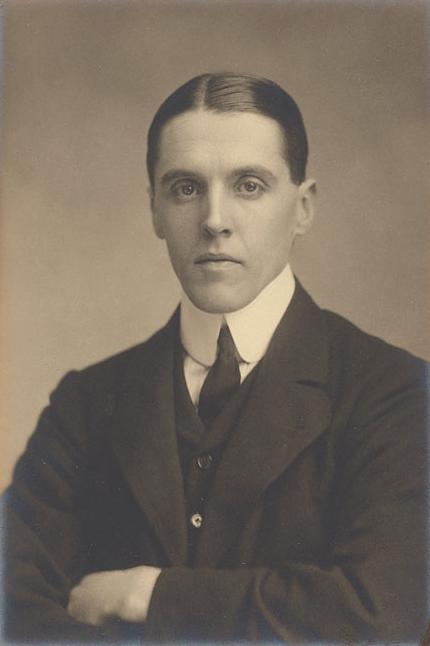
“Encare o sucesso como cavalheiro e o desastre como homem.”
Meet success like a gentleman and disaster like a man
citado em What is truth - Página 22, de Henry Powell Spring - Orange Press, 1944 - 454 páginas
“The world continues to offer glittering prizes to those who have stout hearts and sharp swords”
F. E. Smith, 1st Earl of Birkenhead
"Idealism in International Politics", Rectoral Address at Glasgow University (7 November, 1923).
Quoted in The Times, 8 November 1923, according to "Guarantee of Peace: The League of Nations in British Policy 1914-1925" by Peter J. Yearwood, pg 280
Contexto: Politically, economically and philosophically the motive of self-interest not only is but must... and ought to be the mainspring of human conduct... For as long a time as the records of history have been preserved human societies passed through a ceaseless process of evolution and adjustment. This process has sometimes been pacific, but more often it has resulted from warlike disturbance. The strength of different nations, measured in terms of arms, varies from century to century. The world continues to offer glittering prizes to those who have stout hearts and sharp swords; it is therefore extremely improbable that the experience of future ages will differ in any material respect from that which has happened since the twilight of the human race … it is for us who, in our history have proved ourselves a martial … people … to maintain in our own hands the adequate means for our own protection and … to march with heads erect and bright eyes along the road of our imperial destiny.
F. E. Smith, 1st Earl of Birkenhead
Speech in the House of Commons against the Trade Disputes Bill (30 March 1906), as published in The Speeches of Lord Birkenhead (1929), pp. 15-22.
Contexto: We are asked to permit a hundred men to go round to the house of a man who wishes to exercise the common law right in this country to sell his labour where and when he chooses, and to 'advise' him or 'peacefully persuade' him not to work. If peaceful persuasion is the real object, why are a hundred men required to do it? … Every honest man knows why trade unions insist on the right to a strong numerical picket. It is because they rely for their objects neither on peacefulness nor persuasion. Those whom they picket cannot be peacefully persuaded. They understand with great precision their own objects, and their own interests, and they are not in the least likely to be persuaded by the representatives of trade unions, with different objects and different interests. But, though arguments may never persuade them, numbers may easily intimidate them. And it is just because argument has failed, and intimidation has succeeded, that the Labour Party insists upon its right to picket unlimited in respect of numbers.
“None the wiser, perhaps, my lord but certainly better informed.”
F. E. Smith, 1st Earl of Birkenhead
Quoted in "London Letter" by Francis Cowper in New York Law Journal (28 August 1961), p. 4.
Contexto: Judge: I've listened to you for an hour and I'm none wiser.
Smith: None the wiser, perhaps, my lord but certainly better informed.
F. E. Smith, 1st Earl of Birkenhead
"Idealism in International Politics", Rectoral Address at Glasgow University (7 November, 1923).
Quoted in The Times, 8 November 1923, according to "Guarantee of Peace: The League of Nations in British Policy 1914-1925" by Peter J. Yearwood, pg 280
Contexto: Politically, economically and philosophically the motive of self-interest not only is but must... and ought to be the mainspring of human conduct... For as long a time as the records of history have been preserved human societies passed through a ceaseless process of evolution and adjustment. This process has sometimes been pacific, but more often it has resulted from warlike disturbance. The strength of different nations, measured in terms of arms, varies from century to century. The world continues to offer glittering prizes to those who have stout hearts and sharp swords; it is therefore extremely improbable that the experience of future ages will differ in any material respect from that which has happened since the twilight of the human race … it is for us who, in our history have proved ourselves a martial … people … to maintain in our own hands the adequate means for our own protection and … to march with heads erect and bright eyes along the road of our imperial destiny.
F. E. Smith, 1st Earl of Birkenhead
"State Toryism and Social Reform" in Unionist Policy and Other Essays (1913). Pg 46.
Contexto: We stand for the State and for the unity which, whether in the form of kingdom or empire or class solidarity, the State alone can bring. Above all stands the State and in that phrase lies the essence of Toryism. Our ancestors left it to us, and not the least potent method of preserving it is to link the conception of State Toryism with the practice of Social Reform.
“Churchill has spent the best years of his life preparing impromptu remarks.”
F. E. Smith, 1st Earl of Birkenhead
Quoted in A Politician Must Watch His Wit by Clayton Fritchley in The New York Times Magazine (3 July 1960), p. 31
F. E. Smith, 1st Earl of Birkenhead
Statement of 1925, as quoted in Lord Reading (1967) by H. Montgomery Hyde, p. 387.
F. E. Smith, 1st Earl of Birkenhead
Legal Life and Humour (1916), edited by Joseph Heighton, p. 49
F. E. Smith, 1st Earl of Birkenhead
Introduction to H. Hills and M. Woods, Industrial Unrest: A Practical Solution (1914)
F. E. Smith, 1st Earl of Birkenhead
Quoted in Contemporary Personalities (1924) by Marquess Curzon.
F. E. Smith, 1st Earl of Birkenhead
Letter to Lord Reading (March 1925) on India, as quoted in Lord Reading (1967) by H. Montgomery Hyde, p. 387.
F. E. Smith, 1st Earl of Birkenhead
Speech in the House of Lords http://hansard.millbanksystems.com/lords/1920/nov/23/government-of-ireland-bill on the Government of Ireland Bill (23 November 1920).
F. E. Smith, 1st Earl of Birkenhead
A 1924 entry in Evelyn Waugh's diary, cited in The Times 23 May 2006, Law supplement p.7
F. E. Smith, 1st Earl of Birkenhead
Speech http://hansard.millbanksystems.com/lords/1929/nov/05/india-the-viceroys-statement in the House of Lords (5 November 1929)
“To me it is frankly inconceivable that India will ever be fit for Dominion self-government.”
F. E. Smith, 1st Earl of Birkenhead
Letter to Lord Reading (4 December 1924), quoted in H. Montgomery Hyde, Lord Reading (Heinemann, 1967), p. 382
F. E. Smith, 1st Earl of Birkenhead
Quoted in F.E. : The Life of F. E. Smith First Earl of Birkenhead (1933) by Frederick Second Earl of Birkenhead, 1959 edition, Ch 9
F. E. Smith, 1st Earl of Birkenhead
Statement of 1925, as quoted in Britain between the Wars (1955) by C. L. Mowat, p. 300.
F. E. Smith, 1st Earl of Birkenhead
On Bolshevism, in Law, Life, and Letters (1927), Vol. 2, Ch. 19
F. E. Smith, 1st Earl of Birkenhead
Quoted in F.E. : The Life of F. E. Smith First Earl of Birkenhead (1933) by Frederick Second Earl of Birkenhead, 1959 edition, Ch 9
F. E. Smith, 1st Earl of Birkenhead
"Lord Roberts and Germany", p. 78
Unionist Policy and Other Essays (1913)
F. E. Smith, 1st Earl of Birkenhead
"The Future of the Conservative Party", p. 17
Unionist Policy and Other Essays (1913)
F. E. Smith, 1st Earl of Birkenhead
Letter to Lord Reading (March 1925) on India, quoted in H. Montgomery Hyde, Lord Reading (Heinemann, 1967), p. 387
F. E. Smith, 1st Earl of Birkenhead
Letter to Lord Reading (13 November 1924), quoted in H. Montgomery Hyde, Lord Reading (Heinemann, 1967), p. 382
F. E. Smith, 1st Earl of Birkenhead
Speech in Epping (21 October 1924), quoted in The Times (22 October 1924), p. 18
F. E. Smith, 1st Earl of Birkenhead
Speech to the Constitutional Club (20 November 1923), quoted in The Times (21 November 1923), p. 17
F. E. Smith, 1st Earl of Birkenhead
Speech to the Constitutional Club (20 November 1923), quoted in The Times (21 November 1923), p. 17
F. E. Smith, 1st Earl of Birkenhead
Speech in Limehouse (4 October 1909) on the Liberal Government's Licensing Bill, quoted in The Times (5 October 1909), p. 4