“A mathematician may say anything he pleases, but a physicist must be at least partially sane.”
Quoted in R. B. Lindsay, "On the Relation of Mathematics and Physics," Scientific Monthly 59, 456 (Dec. 1944)
Attributed
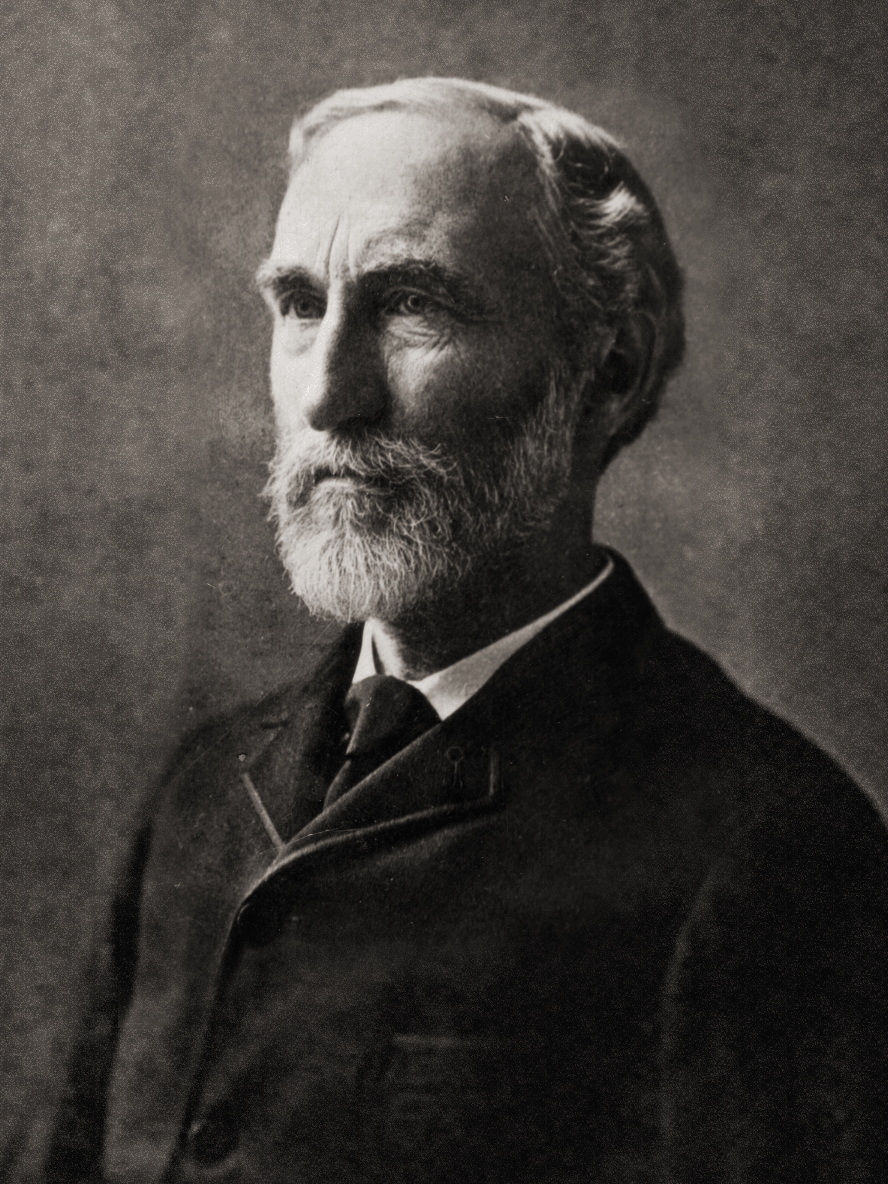
Josiah Willard Gibbs foi um cientista americano que realizou importantes contribuições teóricas na física, química e matemática. Seu trabalho sobre as aplicações da termodinâmica contribuiu para transformar a química física em uma ciência dedutiva rigorosa. Junto com James Clerk Maxwell e Ludwig Boltzmann, criou a mecânica estatística , explicando as leis da termodinâmica como consequências das propriedades estatísticas de grandes agregados de partículas. Gibbs também trabalhou nas aplicações das equações de Maxwell a problemas em óptica física. Como matemático, ele inventou o moderno cálculo vetorial .
Em 1863, a Universidade Yale concedeu a Gibbs o primeiro doutorado em engenharia. Após uma residência temporária de três anos na Europa, Gibbs passou o resto de sua carreira em Yale, onde ele foi professor de física matemática de 1871 até sua morte. Trabalhando em relativo isolamento, ele se tornou o primeiro cientista teórico nos Estados Unidos a obter uma reputação internacional e foi elogiado por Albert Einstein como "a maior mente na história americana". Em 1901, Gibbs recebeu o que era então considerada a maior honra que podia ser recebida na comunidade científica internacional, a Medalha Copley da Real Sociedade de Londres, "por suas contribuições à física matemática".Comentadores e biógrafos observaram o contraste entre a vida quieta e solitária de Gibbs na Nova Inglaterra durante a virada do século e o grande impacto internacional de suas ideias. Embora seu trabalho tenha sido quase que inteiramente teórico, o valor prático das contribuições de Gibbs tornou-se evidente com o desenvolvimento da química industrial durante a primeira metade do século XX. De acordo com Robert A. Millikan, em ciência pura Gibbs "fez pela mecânica estatística e pela termodinâmica o que Laplace fez pela mecânica celeste e Maxwell fez pela eletrodinâmica, isto é, fez de seu campo uma estrutura teórica quase completa." Wikipedia
“A mathematician may say anything he pleases, but a physicist must be at least partially sane.”
Quoted in R. B. Lindsay, "On the Relation of Mathematics and Physics," Scientific Monthly 59, 456 (Dec. 1944)
Attributed
From the preface to Elementary Principles in Statististical Mechanics (1902), p. viii. Full book https://archive.org/details/elementaryprinc00gibbgoog
From Gibbs's letter accepting the Rumford Medal (1881). Quoted in A. L. Mackay, Dictionary of Scientific Quotations (London, 1994).
At a Yale faculty meeting, during a discussion of language requirements in the undergraduate curriculum. Quoted in Muriel Rukeyser, Willard Gibbs (Garden City, NY: Doubleday, Doran & Co., 1942), p. 280.
Attributed
Quoted by C. S. Hastings in "Biographical Memoir of Josiah Willard Gibbs 1839-1903," National Academy of Sciences Biographical Memoirs, vol. VI (Washington, D.C.: National Academy of Sciences, 1909), p. 390. Complete memoir http://books.nap.edu/html/biomems/jgibbs.pdf <br class="br">Attributed
From Gibbs's obituary for Rudolf Clausius (1889). See The Collected Works of J. Willard Gibbs, vol. 2 (New York: Longmans, Green and Co., 1928), p. 267. Complete volume http://www.archive.org/details/collectedworksj00longgoog
“The whole is simpler than its parts.”
Quoted by Irving Fisher in "The Applications of Mathematics to the Social Sciences," Bulletin of the American Mathematical Society 36, 225-243 (1930). Full article http://projecteuclid.org/euclid.bams/1183493954 <br class="br">Attributed
“Anyone having these desires will make these researches.”
About his own scientific work. Quoted in Muriel Rukeyser, Willard Gibbs (Garden City, NY: Doubleday, Doran & Co., 1942), p. 431.
Attributed
From Gibbs's obituary for Hubert Anson Newton (1897), in the Biographical Memoirs of the National Academy of Sciences http://www.nasonline.org/publications/biographical-memoirs/memoir-pdfs/hubert-newton.pdf.
From the preface to Elementary Principles in Statististical Mechanics (1902), p. ix.
Quoted in Muriel Rukeyser, Willard Gibbs (Garden City, NY: Doubleday, Doran & Co., 1942), p. 4.
Attributed