“Quando há falta de honra do governo, a moral de todo o povo estará envenenada.”
When there is a lack of honor in government, the morals of the whole people are poisoned.
Citado no New York Times (9 de agosto de 1964)
Herbert Clark Hoover foi o 31º presidente dos Estados Unidos entre 1929 e 1933. Hoover nasceu em uma família quaker e trabalhou como engenheiro de minas. Ele alcançou proeminência internacional por seus esforços humanitários na Bélgica e por servir como chefe da Administração de Alimentos dos EUA antes e durante a Primeira Guerra Mundial. Como secretário do comércio sob os presidentes Warren G. Harding e Calvin Coolidge, ele promoveu parcerias entre governo e negócios com o nome de "modernização econômica". Na eleição presidencial de 1928, Hoover facilmente venceu a indicação Republicana, mesmo nunca tendo sido eleito para um cargo público. Ele é o mais recente secretário membro do gabinete presidencial a ser eleito presidente dos Estados Unidos, e um de apenas três presidentes a ser eleito sem experiência eleitoral ou alta patente militar. O país estava no auge de sua bolha econômica, o que facilitou sua grande vitória contra Al Smith, o candidato Democrata.Hoover acreditava no Movimento de Eficiência, que afirmava que o governo e a economia estavam cheios de ineficiência e desperdício, e apenas podiam ser melhorados por especialistas que entendiam os problemas e como resolvê-los. Ele também acreditava na importância do voluntarismo e no papel dos indivíduos na sociedade e economia. Hoover, que adquiriu uma pequena fortuna com mineração, foi o primeiro de apenas dois presidentes a redistribuir seu salário . Quando a bolsa de Nova Iorque quebrou em 1929, oito meses depois do início de seu mandato, Hoover tentou combater a Grande Depressão com esforços governamentais, projetos públicos como a Represa Hoover, tarifas como a Smoot–Hawley, também conhecida como Lei Smoot-Hawley , a Leis da Receita, de 1932, o aumento no suporte de imposto de 25% para 63% e aumentos nos impostos corporativos. Essas medidas não produziram uma recuperação econômica durante seu mandato, mas serviram de base para várias políticas do New Deal de Franklin D. Roosevelt. Foi candidato a reeleição em 1932, mas foi derrotado por Roosevelt e deixou a presidência no ano seguinte. Depois de 1933, ele se tornou um porta-voz contra as políticas internas e externas do New Deal. Em 1947, o presidente Harry S. Truman o trouxe de volta para ajudá-lo a deixar a burocracia federal mais eficiente através da Comissão Hoover. O consenso entre os historiadores é de que sua derrota na eleição de 1932 se deu por ele não conseguir reverter o declínio econômico do país, apesar de seu apoio a lei seca ter sido um fator importante também. Hoover morreu em 20 de outubro de 1964, aos 90 anos de idade. Foi enterrado na sua cidade natal, West Branch, Iowa. Wikipedia
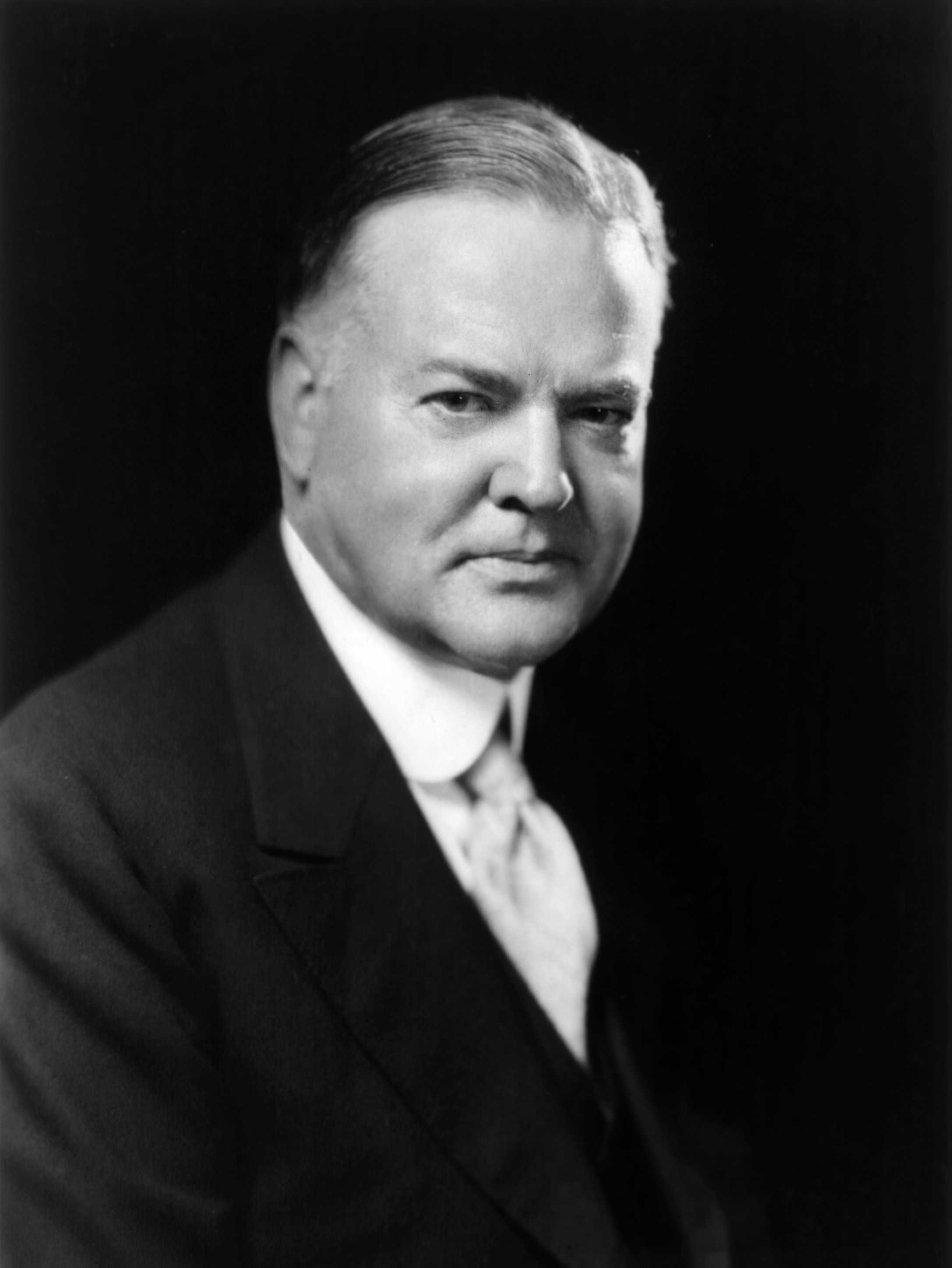
“Quando há falta de honra do governo, a moral de todo o povo estará envenenada.”
When there is a lack of honor in government, the morals of the whole people are poisoned.
Citado no New York Times (9 de agosto de 1964)
Older men declare war. But it is youth that must fight and die. And it is youth who must inherit the tribulation, the sorrow and the triumphs that are the aftermath of war.
Discurso em Chicago, Illinois na 23a Convenção Nacional Republicana (27 de Junho de 1944)
You convey too great a compliment when you say that I have earned the right to the presidential nomination. No man can establish such an obligation upon any part of the American people. My country owes me no debt. It gave me, as it gives every boy and girl, a chance. It gave me schooling, independence of action, opportunity for service and honor. In no other land could a boy from a country village, without inheritance or influential friends, look forward with unbounded hope. My whole life has taught me what America means. I am indebted to my country beyond any human power to repay.
Carta ao senador George H. Moses, presidente da convenção republicana nacional, mediante conhecimento da sua nomeação para presidente (14 de junho de 1928)
Se dirigindo a Des Moines, Iowa, (4 de outubro de 1932)
“Sendo um político é uma profissão pobre. Sendo um funcionário público é um nobre.”
Being a politician is a poor profession. Being a public servant is a noble one.
On Growing Up: Letters to American Boys & Girls (Em crescer: Cartas para meninos & meninas americanos) (1962); também citado por Herbert Hoover em Growing Up: Letters from and to American Children (1990) editado por Timothy Walch
“Honra não é propriedade exclusiva de qualquer partido político.”
Honor is not the exclusive property of any political party.
citado em Christian Science Monitor (Monitor de Ciência Cristã) (21 de maio de 1964)
From an article originally published in the February 6, 1949 issue of "This Week" Magazine, from "Addresses Upon the American Road,Volume: Volume 8: 1955-1960." Developed in speech entitled "Moral and Spiritual Recovery from War" presented October 13, 1945, at 75th Anniversary of Wilson College at Chambersburg, Pennsylvania. "The Crusade Years, 1933–1955: Herbert Hoover's Lost Memoir of the New Deal Era and Its Aftermath", edited by George Nash
The Uncommon Man
The Hoover Policies (1937)
Address to the Gridiron Club (27 April 1931)
“About the time we can make the ends meet, somebody moves the ends.”
Quoted in obituaries (20 October 1964)
The New Day: Campaign Speeches of Herbert Hoover (1928)
The New Day: Campaign Speeches of Herbert Hoover (1928), Campaign speech in New York (22 October 1928)
Statement http://books.google.com/books?id=6swLAAAAYAAJ&q=%22What+the+country+needs+is+a+good+big+laugh%22+%22if+some+one+could+get+off+a+good+joke+every+ten+days+i+think+our+troubles+would+be+over%22&pg=PA4#v=onepage to Raymond Clapper http://www.gwu.edu/~erpapers/teachinger/glossary/clapper-raymond.cfm (c. February 1931)
Vol. 1, Issue 1, June 1922. http://books.google.com/books?id=KPlIAAAAYAAJ&pg=PA18&lpg=PA18&dq=%E2%80%9CIn+its+broad+aspects,+the+proper+feeding+of+children+revolves+around+a+public+recognition+of+the+interdependence+of+the+human+animal+upon+his+cattle.+The+white+race+cannot+survive+without+dairy+products.%E2%80%9D&source=bl&ots=MBJ6brhswK&sig=XePoKH5MnYp4pf1YwByblt2eu0M&hl=en&sa=X&ei=EnxsUrubK8nLkQeos4HIAQ&ved=0CEcQ6AEwAg#v=onepage&q=%E2%80%9CIn%20its%20broad%20aspects%2C%20the%20proper%20feeding%20of%20children%20revolves%20around%20a%20public%20recognition%20of%20the%20interdependence%20of%20the%20human%20animal%20upon%20his%20cattle.%20The%20white%20race%20cannot%20survive%20without%20dairy%20products.%E2%80%9D&f=false <br class="br">The Dairy World (1922)
Fonte: The Memoirs of Herbert Hoover: The Great Depression, 1929-1941 (1952), p. 2: Lead paragraph Chapter 1 : The origins of the Depression.
Herbert Hoover, 1874-1964 (1971)
On Prohibition; sometimes misquoted as referring to Prohibition as "a noble experiment"; reported as such in Paul F. Boller, Jr., and John George, They Never Said It: A Book of Fake Quotes, Misquotes, & Misleading Attributions (1989), p. 47-48.
The New Day: Campaign Speeches of Herbert Hoover (1928)
The New Day: Campaign Speeches of Herbert Hoover (1928), Campaign speech in New York (22 October 1928)
Page 4
The Challenge to Liberty (1934)
The New Day: Campaign Speeches of Herbert Hoover (1928)
The New Day: Campaign Speeches of Herbert Hoover (1928)
“This is not a showman’s job. I will not step out of character.”
Hoover Off the Record (1934)
On losing the presidency to Franklin Delano Roosevelt
Hoover Off the Record (1934)
The New Day: Campaign Speeches of Herbert Hoover (1928)
Herbert Hoover, 1874-1964 (1971)
Address at annual dinner of the Chamber of Commerce of the United States (1 May 1930). Hoover is sometimes misreported as having said on this occasion or another, "Prosperity is just around the corner"; reported in Paul F. Boller, Jr., and John George, They Never Said It: A Book of Fake Quotes, Misquotes, & Misleading Attributions (1989), p. 48.
“Blessed are the young, for they shall inherit the national debt.”
Address to the Nebraska Republican Conference, Lincoln, Nebraska (16 January 1936)
Press statement (3 February 1931)
To Christopher Morley, quoted in Saturday Review Treasury (1957)
When asked how he dealt with people who blamed him for the Great Depression, quoted in The Court Years 1939-75 (1980) by William O. Douglas