“Aquele que não perdoa destrói a ponte sobre a qual ele mesmo deve passar.”
Variante: Aquele que não pode perdoar destrói a ponte sobre a qual ele mesmo deve passar.
George Herbert foi um poeta, orador e sacerdote anglo-galês.
Membro de uma família aristocrática, estudou na Westminster School e no Trinity College, em Cambridge. Em 1618 foi considerado Fellow da Universidade de Cambridge, instituição onde foi orador entre 1620 e 1628.
Toda a sua obra foi publicada a título póstumo, da qual se destacam: The Temple: Sacred Poems and Private Ejaculations , Herbert compilou o livro Outlandish Proverbs , A Priest to the Temple . Wikipedia
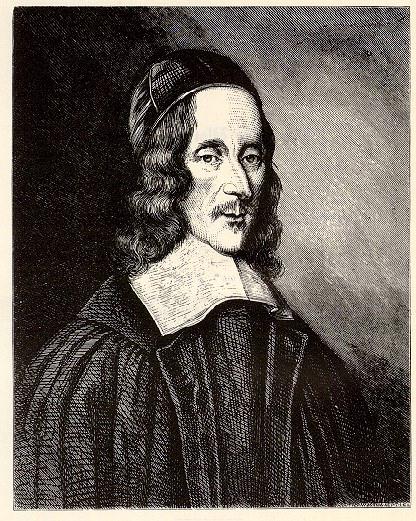
“Aquele que não perdoa destrói a ponte sobre a qual ele mesmo deve passar.”
Variante: Aquele que não pode perdoar destrói a ponte sobre a qual ele mesmo deve passar.
“Uma espada obriga a outra a ficar na bainha.”
One sword keeps another in the sheath <br class="br">"Jacula Prudentum" in: "The Poetical Works of George Herbert: With Life, Critical Dissertation and Explanatory Notes" - Página 314 http://books.google.com.br/books?id=b6IpXPlBKFkC&pg=PA314, de George Herbert, George Gilfillan - Publicado por Appleton,1854 - 328 páginas
“O homem roubou o fruto, mas eu preciso de trepar a árvore.”
Man stole the fruit, but I must climb the tree <br class="br">The Temple: Sacred Poems and Private Ejaculations - Página 25 http://books.google.com/books?id=vv-PaLfn8wIC&pg=PA25, de George Herbert, Christopher Harvey - Publicado por Pickering, 1838 - 361 páginas
“O melhor espelho é um velho amigo.”
The best mirror is an old friend <br class="br">"Jacula Prudentum" in: "The Poetical Works of George Herbert: With Life, Critical Dissertation and Explanatory Notes" - Página 301 http://books.google.com.br/books?id=0R-Gmww20kAC&pg=PA301, de George Herbert, George Gilfillan - 1854 - 328 páginas
“Quem caminha descalço não deve semear espinhos.”
He that goes barefoot must not plant thorns. <br class="br">The remains of that sweet singer of The temple - Página 142 http://books.google.com.br/books?id=u5m1t-RofKEC&pg=PA142, George Herbert, Izaak Walton, Barnabas Oley - Pickering, 1841 - 244 páginas
“534. At the game's end we shall see who gaines.”
Jacula Prudentum (1651)
“183. Where the drink goes in there the wit goes out.”
Jacula Prudentum (1651)
Letter to Nicholas Ferrar (1632-33)
“Bibles laid open, millions of surprises.”
Sin, reported in Bartlett's Familiar Quotations, 10th ed. (1919)
“49. Love and a cough cannot be hid.”
Jacula Prudentum (1651)
“His bark is worse than his bite.”
Jacula Prudentum (1651)
“336. He that makes his bed ill, lies there.”
Jacula Prudentum (1651)
“302. All is not gold that glisters.”
Jacula Prudentum (1651)
“648. Show me a lyer, and I'l shew thee a theefe.”
Jacula Prudentum (1651)
“To write a verse or two is all the praise
That I can raise.”
Praise, reported in Bartlett's Familiar Quotations, 10th ed. (1919)
“445. A great ship askes deepe waters.”
Jacula Prudentum (1651)
“412. He that seekes trouble never misses.”
Jacula Prudentum (1651)
“707. Reason lies betweene the spurre and the bridle.”
Jacula Prudentum (1651)
“The mouse that hath but one hole is quickly taken.”
Jacula Prudentum (1651)
“By all means use sometimes to be alone.”
The Temple (1633), The Church Porch
“467. Warre makes theeves, and peace hangs them.”
Jacula Prudentum (1651)
“208. The honey is sweet, but the bee stings.”
Jacula Prudentum (1651)
“80. He that is warme thinkes all so.”
Jacula Prudentum (1651)
“779. He that marries for wealth sells his liberty.”
Jacula Prudentum (1651)
“177. One stroke fells not an oke.”
Jacula Prudentum (1651)
“499. Gluttony kills more then the sword.”
Jacula Prudentum (1651)
“496. Weigh justly and sell dearely.”
Jacula Prudentum (1651)
“14. Pleasing ware is halfe sould.”
Jacula Prudentum (1651)