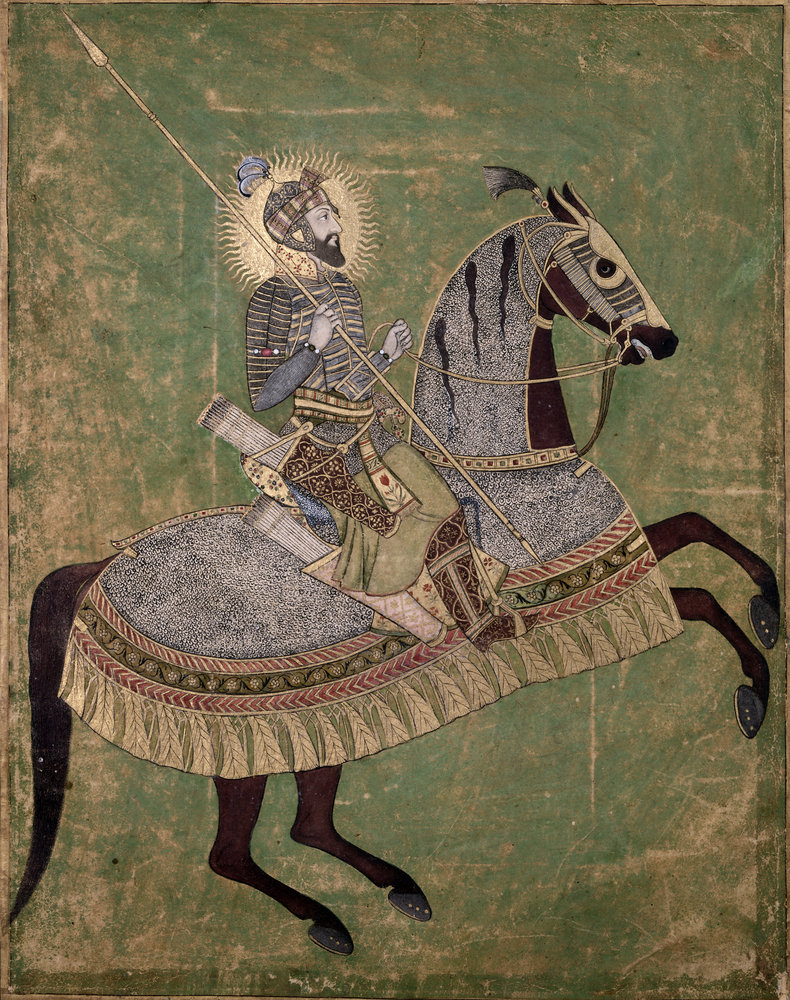
Frases de Aurangzeb
página 3

Abu Muzaffar Muhiuddin Muhammad Aurangzeb Alamgir, também referenciado por Alamgir I foi um imperador mogol cujo reinado durou de 1685 a 1705.

Aurangzeb era considerado inteligente, eficiente e impiedoso, além de ser um devoto muçulmano. Começou o seu reinado prendendo o velho e doente pai, o xá Jahan, e matando os irmãos, seus rivais para o trono. Uma série de conquistas permitiu-lhe estender o Império Mogol cobrindo quase todo o subcontinente indiano no território dos atuais Índia e Paquistão, e parte do atual Afeganistão. No entanto nunca submeteu inteiramente os maratas do Decão, a parte peninsular da Índia e, já perto de sua morte, sua autoridade era amplamente desafiada.

O fanatismo religioso de Aurangzeb levou-o a perseguir a população hindu, em vez de continuar uma política de conciliação, tal como fizera o seu avô Akbar. Foi talvez isso, mais do que qualquer outro motivo, que apressou a fragmentação do império logo após a sua morte, aos oitenta e oito anos. Wikipedia  

✵ 3. Novembro 1618 – 3. Março 1707
Aurangzeb photo
Aurangzeb: 65   citações 0   Curtidas

Aurangzeb: Frases em inglês

“In a small village in the sarkar of Sirhind, a Sikh temple was demolished and converted into a mosque. An imam was appointed who was subsequently killed.”

Quotes from late medieval histories
Fonte: Sirhind (Punjab) Kalimat-i-Tayyibat, cited in : Sharma, Sri Ram, Religious Policy of the Mughal Emperors, Bombay, 1962. p. 138

“In every parganah officers have come from the thanahs with orders from the Presence for the destruction of idols.”

Quotes from late medieval histories, 1670s
Fonte: A letter preserved in the Yasho-Madhav temple of Dhamrai in the Dacca district, dated 27 June, 1672, and printed in J. M. Ray’s Bengali History of Dacca, i. 389. quoted in Sarkar, Jadunath (1972). History of Aurangzib: Volume III. App. V.

“The temple of Chintaman, situated close to Sarash-pur, and built by Sitadas jeweller, was converted into a mosque named Quu)at~ul-islam by order of the Prince Aurangzib, in 1645.”

(Mirat-i-Ahmadi, 232.) The Bombay Gazetteer, vol. I. pt, I. p. 280, adds that he slaughtered a cow in the temple, but Shah Jahan ordered the building to be restored to the Hindus.
Quotes from late medieval histories, 1660s
Fonte: Sarkar, Jadunath (1972). History of Aurangzib: Volume III. App. V.